Showing posts with label Personalities. Show all posts

Tuesday, August 19, 2014

Get More Remotes/Appearances

Talent fees can be a nice “extra” bonus, and it seems like certain air personalities have a few secrets that make them the one that clients request more than everyone else.
  1. Ask for a tour of the business in advance.  You’ll be better able to talk about ‘behind the scenes’ stories you pick up.
  2. Find out direct from the boss/manager what main points they want to make during your broadcast.
  3. Never ask “how’s it going?”  Seldom will a client tell talent that things are going terrifically and they are making tons of money.  They’re afraid you’ll ask for a higher rate next time.  Asking for “strokes” during the live appearance is just setting yourself up for a negative.
  4. Become expert at “small talk.”  Be positive.
  5. Schmooze the employees of the business.  If they like you and feel you did a good job, the boss will probably hear about it.
  6. If you’re having fun with their customers, the employees at the business will notice.  Your gig is to create an atmosphere where folks are enjoying themselves.  When they are, they’re more apt to spend some money.
  7. Don’t hoard the key chains, coloring  books, refrigerator magnets, six packs of soda, etc.  Offer them to the people who came out because you asked them to.  You want them to perceive you as generous and giving.  The freebees should be handed out by the air personality and no one else.  Make them the last thing you put away after the broadcast ends.
Commercial appearances are not the time to do stunts.  It’s simply an opportunity to do informative and entertaining live spots from a remote location.  Use the built-in ambience to enhance your cut-in’s.  Create some excitement.  Show your personality in the confines of something that’s usually a tune-out.

Achieve that, and you'll make them more effective.  That's how to get invited back many, many times.

Wednesday, June 25, 2014

Personalized

Ideally, algorithms driving what should be the user experience would drive each of us farther apart from one another into individualized, customized experiences, driven by our unique values, past behavior and preferences.

So, why does Amazon tend to give us all the identical “people who purchased … also bought” titles for the New York Times best seller list and Pandora tend to play popular hits instead of delving ever deeper into undiscovered tunes of the type I appear to enjoy?

It seems that popularity and mass appeal may have their finger on the scale, creating a less personalized selection.

I think this is why radio’s research-driven music playlists based on known target groups who are large enough to build a radio format around so often prove to be personal enough for the nine out of ten music fans who still choose to use radio for such long periods of time every day.

We’re personalized enough.  Plus we have something else that Pandora makes no attempt to achieve. 

Radio format listeners relate to their favorite artists, personalities and stations as part of a local community which validates who they are, enables to work together to make everyone’s lives better.

It’s the human touch, and maybe some day computer scientists will find a way to automate that, but I have my doubts. 

There is a word for feeling like you’re relating to another real person and then discovering that you’ve been interacting with a software program:  creepy.

Wednesday, June 18, 2014

Every Voice On Your Radio Show Must Agree On

  • Who’s the leader?  You can't be Letterman, Colbert or Katie Couric.  Be who you are, but if you are the lead character, set the tone for the entire program, control the content, production values and momentum.  You can’t win if two players of your soccer team acts like they both are the goalie.
  • Who’s the sidekick?  This is an extremely important role that might even get as much or more mic time as the lead character, but Fred Armisen doesn't try to be Seth Meyers.  Roots takes their part very seriously but never forgets that it's Jimmy Fallon's show.  This may be a more difficult role that playing the lead, requiring quick wits and restraint.
  • Who plays the foils?  This person may not even be a full time employee.  News? weather? traffic? sports?  The more people involved in your performance, the more important that the leader understand the role of ringmaster isn’t to take too much time, but to seamlessly glue the pieces together.
  • Individual vocal character for everyone.  Who listens to be sure it's always clear who's talking and people aren't talking over one another?
  • Humor, especially jokes:  don’t do them unless it feels comfortable and natural.  One person needs to make that call, directing relevance to the target, locale, pacing, production value, theater of mind, in’s and out’s -- to be sure a fistfight doesn’t break out with the mic open.  A bar fight may be fun once in awhile, but not as a way to bring the average person back to "your place" day after day, hour after hour.

Monday, May 12, 2014

Your New Fall Season

The news Friday that ABC-TV has renewed "Nashville" for a third season with a full run of 22 episodes hopefully comes as a reminder that summer is the perfect time of year to plan for "what's new" in the coming year on your show and radio station.

Rayna Jaymes (as the show's website points out) "suddenly discovers her passion for the business is not enough to compete with the new generation of talent lighting up the charts. She's forced to accept the harsh reality that she’ll have to start over and reinvent herself if she plans on being relevant."


Political Scientist Charles A. Murray chose this graduation season to release his new book citing the film 'Groundhog Day' as another reminder of the need to constantly evolve even as life seems to be an exercise in repetitive experiences.
"Without the slightest bit of preaching, the movie shows the bumpy, unplanned evolution of his protagonist from a jerk to a fully realized human being—a person who has learned to experience deep, lasting and justified satisfaction with life even though he has only one day to work with."  He writes "You could learn the same truths by studying Aristotle's 'Ethics' carefully, but watching "Groundhog Day" repeatedly is a lot more fun."
There's a lot of what we all do on radio every day that seems to mirror Bill Murray's life in the movie.  Same things, same times, day after day.

If you are bored with what you do, the audience most likely is too.

The coming summer vacation time of year for both you and your listener is the perfect time to learn a lesson from what works for television.  Think through all of the things you want to keep next year as well as potential new aspects in your character, personalities, benchmarks.

Be sure that as your listener matures and grows, you're doing so as well.

What are your strengths? 
What would you like to change? 

It's  time to review what you've been doing and ask what you need to reinvent, replace and yet remain as strong as in the past.

Attack yourself!  Find and correct your own weaknesses. If you were a new morning show coming into the market what would your strategy be to beat our current/past show?

What weaknesses would you exploit? What are the weaknesses in your show’s strengths?  Each player needs to have their role definitions re-evaluated. 

Study all show benchmarks and regular features. Put all of them - as talent coach Randy Lane and his team routinely suggests - in one of three categories:

  • Perfect as is
  • Needs improving
  • Discontinue
It’s not enough to be the best today; you have to be famous too. Look for ways to generate media press and talk in the market by making this an agenda point in the planning sessions as you "launch your new fall season!"

Monday, April 28, 2014

Why Social Content Is Essential To Every Radio Station

Every conversation (note that Facebook asks "what's on your mind" and then calls them "stories from your friends") is for the benefit of the audience, communicated one to one.
  • Each listener must feel that he/she is part of the conversation.
  • Let the listener tell the story.  Don’t interrupt.  React and respond.
  • Record as many listener voices in advance and pre-edit them.  Radio is an audio medium.  Make the most of sound. 
Sure, encourage text messages, emails and social content, but then call back the best ones and get the person’s voice for use on the air.  Edit them tightly.  Get to the point.  There is no need to punish your audience with small talk like “hello, how are you, thanks for calling.”
  • Think about plot lines.  Edit in advance for a clear beginning, middle and end to each story.
  • Cast the drama with your team’s characters.  Who is best, given their values, to be the generator for this interaction?  The reactor?
  • Feel free to edit laughs and phrases from callers you recorded previously.  It’s show biz.  Reality TV has taught us that compressing a big story line into less time increases impact and power.
Don’t waste a second.

Some programmers will say that's due to PPM.

Actually, it's simply the pace of life today.

Friday, April 25, 2014

Is It Time To Stop Doing Time Checks, Traffic And Weather?

Once essential “basics” of every morning show that were drummed into the head of each personality so that just giving the time wasn’t enough.  You had to do double time sells.  Analog and digital.  Every time.  7:16, 16 past seven.

Reporting traffic and weather every ten minutes wasn’t enough.  We went to “the seven minute traffic and weather guarantee.”  Then, the other guys did too.

That was then.  Now?

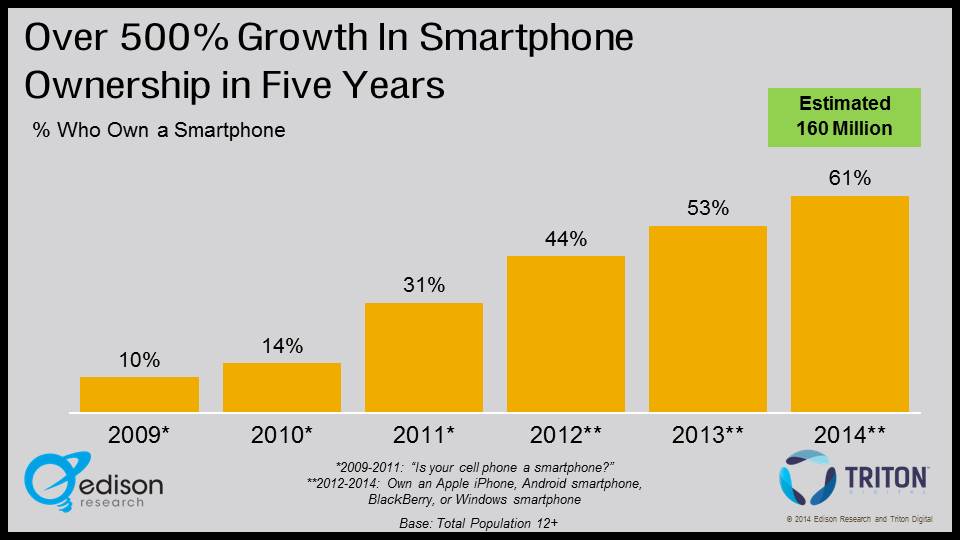
According to the Infinite Dial 2014, 61% of Americans 12+ now own a smartphone—up from 53% in 2013 and 44% in 2012.


If you’re still routinely complying with rules let over from the last century, it’s time to reassess how you spend your time talking. 
  • Give the time.
  • Mention the weather.
  • Talk about traffic problems in real time.
.. but, today, you better add value as well.  Those things have become generics.

Start with the assumption that the majority of listeners already know what you’re about to say and enrich it with a new perspective.

Longtime Texas air talent and personality coach Tommy Kramer calls it adding more camera angles to every scene.

Thursday, April 24, 2014

Stop Doing These Things

Listeners do love trivia and so they always say they love it when asked in focus groups.  Should you do trivia?

What about…
  • Today in history?
  • Joke Of The Day?
  • The daily wakeup call
  • Birthdays?
  • Anniversaries?
  • Lost pet announcements?
  • 50’s-60’s-70’s TV theme beat beds
  • The morning classic /oldie
Unless you can do it in a unique way that brands a unique, memorable benchmark, don’t do anything that sounds like everyone else would do it.

As Powerful Radio advocate Valerie Geller admonishes us all:  “never be boring.”

Tuesday, April 01, 2014

Do Old Basics Still Work?

Legendary programmer/radio research pioneer Todd Wallace recently wrote this article for the Australian trade-publication RadioToday (Aussie's still are dealing with only diary measurement). Given last week's thread I opened, I am taking the liberty of posting it here in hopes it generates even more reaction):

One of the questions I get asked most often these days deals with whether the old “tried and true” radio basics, as they apply to Breakfast Shows, are still valid.

Here in North America, the introduction of PPM ratings technology (Portable People Meter measurement by Nielsen and BBM) has caused many programmers to question or re-think their stance on these basic programming truths.

What should be considered first and foremost are two facts: 


 1)  A strong breakfast show or personality is one of the most-mentioned reasons listeners still cite, even today, for why they like listening to, or feel compelled to listen to, a radio station first thing in the morning, My all-time favorite radio adage, “win breakfast, win the war” still stands. When Mulray joined Triple M numbers spiked, when Wayne “The Poo” Roberts joined 4BC the station immediately began making boatloads of cash, and recently then Kyle and Jackie O switched stations, the new world order of Sydney radio ratings instantly changed. 

2)  Nearly all truly great radio stations have defining breakfast shows.

A strong (as they say down under) "brekky" show..
  • Can serve as a cume magnet, drawing listeners from other stations all over the dial (and even from other media)  
  • Can provide an effective promotional vehicle which helps recycle listeners into other dayparts. 
  • Can be the “center stage” for addressing community needs with outstanding, imaginative public service projects. 
  • Can serve as an effective platform for sales promotions (in a way that couldn’t be supported in other music-driven dayparts) 
  • Can be utilized to “camouflage” increased commercial inventory before 9am so it doesn’t have to run in other dayparts where it may be more noticeable.  
Some programmers seem to think PPM means everything has changed. But the more you examine what really drives breakfast listening, the more you see the validity of maintaining a strong basics discipline.

My friend and colleague Country Consultant Jaye Albright put it this way: “Listeners still perceive and make use of radio in the same ways they always have. It’s the measurement techniques and the sample that changed, requiring new usage tactics and perceptual- driven strategies”.

With that in mind, let us proceed to look at the bigger brekky basics and update some thinking to today.


Station Identification.
You can be the funniest and/or most outrageous jock in the world, but it you don’t get proper credit in a Nielsen ratings diary, your numbers will never match your full potential. Even when being measured by PPM, regular reminders of who you are (call letters or brand name identifier) and what your address is (frequency) and what you’re famous for (“the new Country leader”) helps to remind a panelist of where and why they should return again every morning. That hasn’t changed.


Timechex.
Breakfast listeners still largely listen the way they always have during their multi-tasked morning routine full of activities. Regular time-checks every 3 or 4 minutes help a listener maintain his/her body-clock without having to make a conscious effort to look at a clock or watch. (“I know when The Dirty Joke Of The Day comes on, I need to be out the door”) A time-check can also a useful punctuator or seque-tool in the middle of live content. Double-time, digital followed by analog time (“6:43, that’s 17 before 7”) reinforces the fact you are providing the time-check. (Many listeners may not notice you’ve given the time if you only give single-time.) That hasn’t changed.


Weather. Listeners still want to know what elements they’ll be facing on their way to work/school/etc. You still can’t give weather often enough in the morning (as long as it’s concise). Current temp, sky- weather, and a capsule forecast of the next extreme high several times an hour.
That hasn’t changed.


Humor.
Even on a so-called “serious” station, something “magic” happens when you don’t take yourself so seriously. Most listeners still like hearing something that amuses them. Remember to keep humor positive (not degrading or poking fun at someone else’s expense). Funny is still funny. Most people like to laugh when they wake up. That hasn’t changed.


Features.
Many listeners are feature-junkies, especially bedrock breakfast benchmarks. An effective feature can take what might ordinarily be just a throw-away line, joke, or concept, and give it new life in a way that cannot be ignored. Programmed at the same time every morning as a benchmark bit can generate a tune-in cuming-pattern just for a feature, which will have much longer time-spent-listening (diary) or time-spent-exposed (metered) benefits. Too often, PD’s or jocks tend to stop doing a feature long before its real “use by” date and sometimes end up throwing the baby out with the bathwater. As ancient as they may be to PD’s and jocks trying to stay on the cutting edge, “old” features like “the Mystery Oldie” or “the Joke Of The Day” or “Battle Of The Sexes” trivia can still be very entertaining to the average listener. That hasn’t changed.


Essential Information.
When a listener wakes up, they want to know if the world is still there. And they expect an efficient summary of news they need to know. Enough of a story-count (of real news, not fluff) to bring them “up to date” is sufficient. (I suggest 6 quickies consisting of a clever grabber- headline and an explanatory follow-up sentence,) Plus traffic, weather, and sports-shorts. That hasn’t changed.


Topicality.
What is today’s big local event? The thing that everyone will be talking about at work. It may not necessarily be “local” but it’s what locals are or will be buzzing about today. And keep it going all morning. Mentioning it once at 6:18 is not enough. You’ll have a new audience again by 6:55, and at 7:30, and at 8:15. That hasn’t changed


Music
The amount of music that should be programmed is largely dependant on how much truly great content is regularly prepared every morning. Some personalities or ensemble teams have so much excellent subject matter that listeners actually prefer to hear them rather than a song. But most shows benefit from scheduling music at least once or twice each quarter-hour as part of the breakfast entertainment mix. I caution clients against programming music-sweeps in a breakfast show. In my experience, most listeners don’t wake up clamoring sweeps, they’d rather hear a great bit or feature after a song plays, and a great song after great spoken or produce content has played. That hasn’t changed.

So what HAS changed?


One way that the application of PPM measurement has changed breakfast shows in the States is that it has provided tangible proof to personalities and teams willing to dive deep into the numbers that brevity is indeed the soul of wit. Even that is an old concept that is still valid, even more valid, today!

Shows that have learned to get to the point fast and streamline their schticke have seen their numbers increase – often significantly – often very quickly. There was a time that some of those personalities just “started talking until they could finally think of something to say”. Now they’ve learned how to focus their content and improve their methods of show prep, often by hiring effective talent coaches.


The good news is that jocks who have educated themselves about what listeners will tolerate, minute- by-minute, find that when what used to be a 4-or-5-minute loosey-goosey rambling is transformed into a tight 2-minute efficient bit with a great payoff, there is a definite and immediate ratings benefit.


Bottom-line: You can never go wrong by making words work. And by getting morning personalities in the habit of scrutinizing every single bit and feature of their show.

    -- Todd Wallace (602-866-TODD), Phoenix, AZ

Thursday, February 13, 2014

What's In It For You?

When it comes to excuses on "why I don't need to do that," I've heard them all.

1.  "I don't need to do remotes or other personal appearances.  It kills the theater of the mind I create.  I'd prefer to use the magic of radio and have them picture me the way they want to.  If they meet me face to face, that's gone."

Nice try.  My theory on this one is that this person is naturally shy and insecure.  Maybe they got into radio so they could be outgoing and be themself without ever having to face rejection.

As their manager/coach, assure them that everyone is insecure and shy and those of us in the entertainment business can't be as successful as our potential if we don't face and overcome that demon.

Sometimes you simply have to force them out of that comfort zone, placing a set number of remote broadcasts and public appearances in their employment agreement so they have no choice but to do them if they want the job.

Make them get out in front of the broadcast desk close to people, looking each listener they meet directly in the eye and repeat the listener's name as least three times as they interact with them. 

Often, this alone fixes the problem as they begin to realize that people who come wanting to meet them enjoy their personality and they have nothing to fear.

2.  "I don't do social media.  My entire show is social."

No, it's not.  It's a broadcast.  If you get too personal on AM/FM radio by playing every request people ask for, using every phone call you get on air without editing them, your ratings are going to go down because your show will be loved by the folks who call, but boring to the mass audience.

If being on the radio for you is just to have people call you and tell you how wonderful you are because you do your show just for them, you're never going to be as successful if you talk to everyone, but do it with a "one to one" vocabulary.

Your task when the microphone is open is to curate everything that is going on right now.  Choose only the best material and maximum value to the listener who chooses to sample you.

Keep them listening longer by being as entertaining and engaging as possible.

Use all of your social tools to build those personal relationships one person at a time.

Tailor which social platforms you use to the tastes of each individual listener.  Use them all, but don't broadcast one post to all of them.  Consider what makes a user of each platform choose that one and make sure they know you understand what makes them unique and special, not just a number in your database.

Need a good example of how this is done?  I have one word for you:  Ellen.

If her great example along with those intellectual/logical explanations don't work, I go for the jugular and tell the personality that failing to use every medium at their disposal in exactly the way its users expect will cost them competitively in the ratings.

To #1:  if you don't get out into the community and also use social and expect the audience to grow every day, you better be the most consistently entertaining personality available to your target in every minute of every day so that they never get tempted to try anything else.  Cume is always going down unless you work hard to keep it growing.

To #2:  If you knew exactly who had ratings diaries or was carrying a Personal People Meter right now, wouldn't you want to take extra care to find out what they are doing, what they like and dislike?

Try this experiment:

Go to the mall and randomly ask people if they have ever participated in the radio ratings.  If you ask 100 people, you'll be lucky to find five who say yes.

At your next public appearance or remote broadcast, ask the very same question (do NOT do it on social platforms or you'll probably get delisted!) and you'll find that as many as one in ten (or even more) answer in the affirmative.

The point is not to do stealth marketing, but to prove to your recalcitrant talent:

The people who reach out to you socially and come out to say hello to you are more than twice as likely as the average person to participate in the radio ratings when they receive that call.

Don't you want as real and close a relationship with them as you can possibly have?

Tuesday, February 11, 2014

Impersonally Personal

Creating universally relatable emotional experiences driven by personal stories:  that's what the best of AM/FM audio media does to engage more than 90% of the population every day of the week

You can only do that by talking to as large a cume audience as possible - one person at a time - when the microphone is open.  That's called intimacy, and it's our greatest strength.

Each listener feels that you are talking only to her personally, even if he is riding in a van pool with six others.  At some level, they know they are an "audience," but due to theater of the mind it feels like you're talking only to each individual.

When the mic is off, all other hours of the day, live appearances and social media require a completely different approach.

Change gears.  Genuinely talk to each person.  Listen to his story, being as personal in response as possible.  Make each individual who "likes" and "follows" you feel as if you want to get to know him by name, face to face.  This is what makes being an AM/FM personality so important.  As a bonus:  it feels good to do.

There is no other medium that can equal the real, enduring relationships built on mutual trust that doing it consistently well creates.

Tuesday, January 28, 2014

Ego

Jay Trachman wrote many wonderful Talent Tips for his "One To One" readers - some of radio's most-famous personalities over more than three decades.  My goal continues to be to since his 2009 death to keep his influence and memory alive by occasionally reprinting his classics:

"He'd do okay here, if only his ego didn't keep getting in the way." If you're like me, you've heard that a few times in your life, and once in awhile, about yourself. You're probably aware that people with weak, rather than strong, egos tend to become performers. (The ones with the strong egos become salesmen.)

There was a fascinating article about strong and weak egos in the New York Times which I think is worth Sharing because it offers some insights to the performer's mind...

Here's what Dr. Paul Ornstein of the U. of Cincinnati said at a conference on narcissism: "Self-esteem depends on how well-developed your sense of self is. We're all exceedingly protective to the extent we feel vulnerable."

Hmmm.

The great psychiatrist Alfred Adler said: "The deeply narcissistic person feels incomplete, and uses other people to feel whole."

Anyone we know?

The Times said, "Up to a point, narcissism can help a person be more successful and happy, but in more extreme cases it causes serious problems in relationships and careers."

Ever have any of those?

Then they displayed a chart comparing "healthy" versus "unhealthy" narcissism. I'd think of it as "strong ego" versus "weak," but you'll find stuff in here that's familiar...

Healthy: Appreciates praise, but does not live for it. Unhealthy: Has an insatiable craving for adulation. Needs praise to feel momentarily good about self.

Healthy: May be hurt by criticism, but the feeling passes. Unhealthy: Is enraged or crushed by criticism, and then broods for long periods.

Healthy: Feels unhappy but not worthless after a failure. Unhealthy: Failure sets off feelings of shame and worthlessness.

The dumbest thing I could do at this juncture is to point to the "unhealthy" ones and say, "Don't be like that!"

That's about as helpful as saying, "Just be yourself!"

 More on this topic tomorrow.

Tuesday, November 19, 2013

Riffing, Radio And Restraint

When you're extremely talented at something it's very tempting to press your advantage and show off a little bit.

Nashville-based performance coach Tom Jackson advises his clients not to just do a carbon copy of their hit when on stage, but to change someone's life by creating a larger than life experience


Nail that In front of a live audience and you get immediate positive feedback, perhaps a standing ovation.

That can make it very tempting the next time you are in the recording studio to overdo it in the same way, but a savvy hit record producer will ask you to tone it back down, create a more intimate and personal experience, one that can be listened to for a thousand times, becoming more potent which each listen.

Great radio personality isn't a stage performance. 

It's one to one and time is precious.

The difference between good and great on radio is not how long you can do the things you are best at, but how quickly.

No matter how large your radio station cume is, it's best to reach it all - one at a time.

Tuesday, October 15, 2013

How Well Do You Know You?

If you didn't already believe that being as in touch with your values and perspective as a good actor playing a role when you are on air, hopefully my blog last week on Christopher Booker's "Seven Basic Plots" made you an adherent.

Thanks to the complexities and endless relatability of being a human being it is possible to take those seven basic story lines and turn them into an infinity of engaging and compelling universal content bits.

Start by writing a "character description" for every member of your team just as you would if you were writing a play and giving the actors (you!) as much detailed and deep explanations of habits, traits, attitudes, likes, dislikes, strengths, weaknesses, etc.

Then, trade yours with your partners and have them add even more.  Once you have a large list of things which define you, focus on the ones which make you different from one another.

That's where the entertainment will come from.

You'll probably never be as good as it as "Friends" was, but the more you can reinforce those different ways of looking at and living life in everything you do, the better.

Sunday, August 11, 2013

P.D. In Absentia

Another Jay Trachman Treasure:

What a beautiful phone call I got today.  "You were my PD."

The caller explained that the PD they had wasn't very bright or experienced, and my writings taught him about how to be a real personality. "I was his PD????"

I thought... I hope I did the job well...
 

Did I impress upon him the importance of having something to say? It should be so obvious, but it isn't -- not to a lot of young jocks and their PDs: the importance of entering the studio each day with more material than one could use. Last week, I ran into Chuck Carson at the post office. He was morning man to my mid-day "housewife" shift when the two of us were both brought to Fresno by Triangle Broadcasting, decades ago. After not seeing Chuck for many years, practically the first reminiscence we Shared was about how we were suddenly required to do show prep. It was probably the most important thing we learned, on that job.
 

Did I help him to understand that entertainment is about helping another to experience emotions, and that one emotion is as good as another? At that very job, on KFRE, I started out hiding behind jokes and "oddities in the news." Then, one day, I happened to look out the window while walking between the on-air studio and the news room, and saw the most magnificent double rainbow I'd ever seen. I Shared it with my listener -- I must have gushed all over it -- and the phones lit up like I'd never seen them before; everyone had his or her own descriptive phrase or impression to add, and very quickly I learned that there were better ways than comedy to affect -- and infect -- my listener.

Did I teach him how to talk to one person, and why it matters?  I remember Mildred, the older woman who had the "hots" for me; she was out of the target demographic and her devotion sometimes bordered on frightening... But, needy as I was, I found it easy to talk directly to her on the air, knowing that she understood -- not just my words -- but my emotional tone... Over time, I realized that when I spoke directly to Mildred, many people felt like I was talking to them. At later times in my career, my Personal Listener was Bonnie, and then Steve... It mattered not; it was the idea of talking to one specific person, that made me sound intimate and real, and "liberated" me to show the spectrum of my emotions.

Did I help him to develop the self-confidence to show his real self to his listeners? Perhaps it was the day when I was just coming down with the flu -- I wasn't sick enough to stay home yet, but I felt like death re-heated. I told my listener about it, and invited everyone to phone in with their own special versions of "poor baby" for me. It was one of the most powerful bits I ever did; there were offices full of people saying it in chorus; someone doing it in Spanish, someone else serenading me, and the phones stayed lit beyond the end of my show. Tell your listener you feel crummy? It worked so well for me, I was ready to risk trying a few other emotions...

Did I impress him with the idea that radio is a business, as well as an art? Oh, what a tough lesson that one was for me. I was "Jay Trachman, DJ hero!" Don't mess with my programming, don't try to tell me what music to play, and don't bring me spots thirty minutes before they're supposed to air, on a Friday afternoon. Ultimately, the station was sold, the new owners deemed me more trouble than I was worth, and I was shown the door. The saddest, most embarrassing thing about it was, on reflection years later, I understood that they were right.

Did I teach this successful radio manager, back in his early days, well enough to help him become successful in a rough business? Oh, I hope so.  Being a program director -- even in absentia -- involves a great responsibility to the people you're trying to "direct." One needs, not only to lay out the ground rules and formatics, but to help them to put forth their best each day, to celebrate their job, their work, and each other, and constantly, to grow better at what they do. I hope I was up to the job.

Saturday, May 25, 2013

Connect Personally And Keep It Real

For the last few days I've been sharing info-graphics from "State of Listening in America" which haven't gotten press coverage and yet I believe impact you very directly much more than than "good news" headlines picked up by media the day after the New York data presentation.

1.  CONNECT PERSONALLY WITH LISTENERS

Listeners have deep affinities with DJs and value the time spent with them.
2.  DJs ARE CONSIDERED CELEBRITIES WHO KEEP IT REAL”


Listeners expect a lot from us.

How have you delivered on those hopes in the last few minutes on your air?


Monday, May 06, 2013

My Inscrutable Blog Post

Sometimes attempting to "explain" something that simply didn't make much sense in the first place only serves to further cloud an issue.

I hope to avoid doing that here.  My New In 2007; Obsolete In 2013 post made sense, I hope, to the people I work directly with since it was designed to serve as a somewhere coded, confidential and personal reminder.

However, a comment came in over the weekend from an innocent reader who can be forgiven for feeling that it was...
Completely biased and useless rhetoric. I have no idea what this post was intended to accomplish. Could you clarify? I mean, how does an iPhone age and model relate to an elder and youth relationship? And what is the goal of a new phone as compared to the goals of each an elder and younger in a mutually satisfying relationship? What are you saying?

I appreciate the feedback and emailed my commenter:  "As I travel and listen to radio, I hear too many personalities talking to an audience that maybe existed at one time - "next hour, we'll..." "more details on our website" etc etc and I keep trying to get their attention and tell them to talk like real people do by reminding them that the only way to avoid cultural obsolescence is to be sharing emotions and telling stories each time you open your mouth. I use Dick Clark and Ed McMahon, rest their souls, as examples as I coach this point by noting that Dick was remaining relevant right to the end as he counted them down every New Year with Ryan while Ed was selling adult diapers and insurance to old people.  Staying fresh, current and contemporary is a personal choice, requiring the breaking of deeply-ingrained old habits which die hard.  Am I a voice in the wilderness?"

My correspondent replied, perhaps teaching the lesson far better than I did...
I believe the essence of radio has always been company, entertainment, and information for the masses. But it has always been one sided. Interactive media like web blogs, chat, and social sites like Twitter have influenced this, clearly, as they cater to individual interaction. The question may have become how can radio become more interactive? Less pretense and more camaraderie is appreciated and demanded by the radio audience today, in my view. And to at least sound (believably) interactive is crucial.

Why didn't I think of that?

Any time you read this blog and feel like improving on it, please add a comment or clarification.  Help me to "at least sound interactive."

Saturday, May 04, 2013

New In 2007; Obsolete In 2013

An internal Apple memo now calls the original iPhone, launched less than seven years ago (to put it more kindly) "vintage."

How are you doing in that department?

Fortunately, there aren't many areas of our culture moving faster than the tech world, but move they do.


If you're still talking to the same "personal listener" you created when you first got into radio, it's likely that you're as "today" as American Family Publishers.

Every parent knows:  young people aren't going to make the effort to understand and relate to their elders.

If anyone in an older person to younger person relationship is going to "speak the language" of the other person, only the older of the two is fully-equipped to understand and communicate to the other.

Take a bite out of today's "apple" before it takes a bite out of you.

Saturday, April 13, 2013

How to Trick People Into Thinking You’re Good Looking

You can't be Jenna Marbles. 

There already is one, and thanks to You Tube, the 26-year old was just called "the future of celebrity" by The New York Times, and employs every tool at her command to drive more than a million views every single day and more money than she had ever seen before in her life.
"She is a D.I.Y. digital entertainer who conceives of, stars in, shoots, edits and uploads her own videos — often in a single day."- NYT writer Amy O'Leary

You can learn from what she does.


“My perspective is to think, ‘I just have a lot of Internet friends.” - Jenna Marbles
  1. She skillfully juggles Facebook, Twitter, Instagram and YouTube to build a deeply loyal connection with fans who find her eminently easy to relate to. 
  2. Her mom is a Rochester-area marketing consultant, so what she does isn't an accident.
  3. Unlike other YouTube personalities who invest in better cameras, lighting and production values, she has stuck with her original lo-fi operation.  It looks "real."
  4. She polls her Facebook fans for ideas
  5. She does impersonations.
  6. She rants.
  7. She plays off gender dynamics.
  8. She undermines her camera-ready good looks for the sake of comedy.
  9. She starts mini-memes.
  10. Her videos typically last five to eight minutes.
“What I get to do is have fun in my house, by myself, and put it on the Internet.”

That's a top ten "to do" list and an effective mission statement for anyone who wants to do "You Radio" too, don't you think?

Monday, March 11, 2013

If You Want To Be A Radio Personality

It has been too long since I recycled a Jay Trachman treasure:

Focus on four areas, which I think are universal necessities for putting yourself across as a "friend" -- someone who's "for real" -- and training the listener to pay attention.

1.  You've got to be speaking to someone specific.
Not a demographic, not an average - someone who is very real to you (even if it's a fantasy), and with whom you feel comfortable. Two reasons: first, the safety this Personal Listener affords you - to block out the masses and picture yourself with this one valued friend - allows you to display a spectrum of emotions you'd never reveal to a crowd of strangers. (More about this in a moment.) Second, when you truly believe you're talking to one person, everyone listening who seeks companionship from his/her radio will fantasize that this person is them.

The Personal Listener has a name, a family, a history, an occupation, a hair color and all the other attributes required so you can picture him or her in your mind when you open the mike. And their primary reason for being there is not the music or the information you offer; it's to spend time with you, because he or she enjoys your company. Not what you do - who you are.

2.  You've got to be focusing on the person you're speaking to, rather than the words you're saying.  

Otherwise one hears strange inflection patterns and often a hyped energy level that sounds phony. A programmer tells the young jock, "Be up and bright!" It's nice when you are, but it's not appropriate coming out of a soft ballad. When you say the station identifier - no one could possibly be that enthusiastic about something they say every five minutes for four hours. You can announce those words and say them authoritatively - but when you feign enthusiasm, you destroy any chance that the listener will relate to you as a person.

3.  In order to be perceived as a friend, you must behave like one.
That means doing the things all human beings do. Among them: showing the spectrum of your emotions. Sometimes people are happy; sometimes they're sad. Sometimes they're angry and sometimes they're tender. You don't have any friends who don't show all these emotions - and more - to you, over a period of time. It's something people expect from one another. You can't achieve emotional intimacy - friendship - with your listener without doing it.

4.  You have to prepare material for your show.
Most important, you need to be armed with Life Content when you walk in the studio. Life Content:  brief bits about your life experiences and your responses to them. Anything which caused you strong feelings is worth talking about with your listener. Most jocks don't do show prep - especially after the morning show. I've heard every excuse in the book. But the bottom line is, they almost uniformly fail to entertain.

Most of the jocks I hear who don't prep rely on station slogans, positioners, promos and whatever other liner-card junk they can come up with. One of the hallmarks of the DJ who has nothing to say is that those crutch phrases get repeated way more than the programmer or consultant requires. These DJs train the listener to tune them out anytime they open the mike. Ultimately, a survey-taker comes along and asks people what they like least about the station, and they'll reply, "The DJs talk too much!"  They don't talk too much - they don't say anything worth hearing!

Entertainment means: enabling another to experience his or her feelings in a safe environment.  Make a person laugh, make them cry, make them shake their fists in anger - you have committed entertainment. Every bit you do should lead to an expression of emotion, calculated to make your listener feel something in response. This is exactly what the music you play does.  You need to do it, too.

Being a radio performer isn't rocket science... But it does require some understanding and a good deal of work - both before air time and during.

Or... you could settle for being an interchangeable jock who wonders why you can never make much more than minimum wage...

Monday, February 04, 2013

Reaffirmation: A Note From A Friend

Anne Silberman writes:

Since I've been out of radio for a few years, and have lived all across the country since 2010, I've had a chance to talk to many people, casually, about their relationship with their favorite radio stations.

These conversations happened out of the blue and quite naturally (usually when I mentioned what I used to do for a living) but they've added up to something meaningful for me. When I was on the air, it was natural for me to think of the listeners as a collective. A group who were fans of the music on the station. I had a job to do and it was nice knowing that there were folks out there listening. While I was rarely a "big personality" on the station, I did some promotions and appearances, and did my best to be kind and respectful of the listeners who showed up to get a bumper sticker and say "hi". But, perhaps I always kept my emotional distance from them.

Since I've been off of the air and living down from the clouds, I have been able to witness the loyalty of the listener from afar. What has struck me most is how people truly identify with a station.

I see the looks of pride in their faces, when they mention a particular morning-show host or the music programmed. This happens whether the person is a fan of Country music, pop or adult alternative.

They mention their station, and a 'secret smile' appears on their face - like they are having a special memory, that makes them feel 'at one' with a larger force. They go "inside of themselves", for a second, and then come back to the conversation. What is it about radio that makes such an intimate connection with people? The voices and music enter their heads and mingle with their own world and thoughts in a way that TV or the Internet doesn't seem to do. Even today, with the on-air product, so pre-packaged in many ways, it still happens. These people have formed a real relationship with their radio friends and when one of them is suddenly gone, they feel a real loss.

In Harrisburg, PA, where I grew up, a friend still talked about a DJ who had been fired from a Christian station a year ago. This can't be taken lightly.

Maybe, as a kid, I used to have that secret smile, too, when I thought of WKBO, the station I grew up with.

30 years later, I can still remember all of the names of the DJs on that station AND their day parts! "Alexander in the Morning", "Slim Jim Buchannan", "John St. John" and "Big Jim Roberts" were as much a part of my teenage years as my friends and their cars.

Probably got into radio because just listening to it made me feel like I was part of something great.

It makes me so sad when I tune into a station and I hear listless voice-tracking and generic promos and station IDs. If the Program directors and corporate-controlled programmers could only see the faces of the people, as they were describing the station, I think the world would be a better place. 27 seconds to talk up a record might not be enough to connect!

I just wanted to write this to somebody who'd understand. Thanks, Jaye, for letting me vent.