Showing posts with label creating content. Show all posts

Tuesday, November 18, 2014

A Sense Of History

As we all get ready the 39th annual Twin Cities radio meeting, I am reminded of an anonymous response back in 1996 to a "RadioIQ" (our client e-zene) report of CBS Radio President Dan Mason’s talk at the Upper Midwest Communications Conclave which continues to echo all these years later.
 
“Jobs on the programming side of radio will continue to be eliminated,” Mason correctly predicted back then. “For every position eliminated in programming this year, there will be three added in sales.”

Now that programmatic buying and selling is emerging, eliminating reps while making media sales more transactional and less seller-driven, I am reminded of an anonymous comment I got after that post from 18 years ago:
  
"…any medium which requires more effort to sell than to create is headed for a future no better than slimy posters on the brick wall of public consciousness."

I greatly respect Mason’s smarts and proven track record over the years since that Conclave speech, but I have always wished I knew who “anonymous” was.

That person may have been the smartest of us all.

Their comment remains true, now than ever.

Monday, October 27, 2014

Is Country Radio Too Dependent On Music?

NuVooDoo's strategic researchers have been sharing their radio format national perceptual trending on their blog for several years.  Recently, they've been probing the aspects of programming which "delight" the typical format listener.

If you ask what it was that surprised them other than a song, the answers tend to be contest prizes and funny morning show bits.  Well-designed contests hit the mark, as does genuinely humorous comedy.  While listeners rarely cite being pleasantly surprised by station imaging, we’re certain that there are instances of that among the 37% overall who were surprised in a good way by something other than a song in the past week.
   -- Leigh Jacobs

Pop CHR ranks #1 in its ability to please the audience with music and country comes in a close second in that measurement.


However, when they dug into the most pleasing non-music content, country radio ranks next to last when compared to eight other music formats.


Even worse, country's most pleasing non-music surprises come about once a month, compared to the other format listeners who get their surprises daily or at least weekly when compared to our P-1 listeners.

If the passion for country's music softens, as it historically always has about once a decade for every music style, almost all other formats are better positioned in the minds of their core in contest prizes, funny morning show bits and other program elements besides music images.

There's never a better time to measure your station-specific performance in driving usage and loyalty with non-music content than right now.

Monday, October 06, 2014

I Completely Fell Apart

Another true-life lesson, shared in hopes it teaches you something that you don't need to learn the hard way, like I did.

I played trombone in my high school band and orchestra.

It never felt like I was all that talented as a musician, but since I moved up to first chair and eventually my band director encouraged me to enter a regional solo competition, I suppose I was good enough.

However, that Saturday morning in Canton, Ohio, in a school room when my piano accompanist got to the place where I was to come in, I cracked.

Suddenly, my memory was gone.  I had practiced.  I had rehearsed.  I had memorized, but when it was my turn to perform, I lost everything.  My embouchure collapsed.

I didn't play very much, and what I did play was terrible.  I had sounded better in my very first lesson many years before.

I wanted to run and hide as the pianist played her part perfectly.

What I learned:  it's not enough to "prepare." 

From then on, I vowed to always OVER-prepare.

Prepare beyond being ready, beyond knowing your part, past perfect execution.

How did it work out?  A few years later, auditioning for my university band and orchestra, I made the cut.  I've won more than my share of broadcast awards in the intervening years as well.

My hope:  you never have to go through the complete humiliation I had to experience as an adolescent in order to learn how crucial over-prep on everything is.

 I've always wondered what and who (click to read his parents' story if you're not aware of it) it took for the likes of Richard Sherman or Russell Wilson (another powerful tale) to learn that lesson at such a young age.

Thursday, September 11, 2014

This Is Not A Test, It's An Actual Emergency

Blaine Thompson has been writing "Indiana RadioWatch" specifically for Hoosier Broadcasters since 1998.   

He sent this email last night from the NAB Radio Show in Indianapolis:

In one session, I kept hearing that "Content is Key." If your radio station has great content, people will find it and listen to it.

As I write this, the President is speaking. I realize that several radio stations across Indiana have this speech on their airwaves. Some radio stations do this broadcast by adding a command into the automation system. Some radio stations air the speech, and bring in local hosts to discuss what the President said. As it is 9:00PM, some radio stations let a weekender or part-timer come into the radio station to make sure the speech airs.

However, what about promotion? I asked a broadcaster about this today, and was greeting with a single word:

"What?"

So, I asked:

...Did you put an announcement on your radio station Facebook page, saying, "Listen to W____ at 9PM tonight"?

...Did you add an announcement to your Twitter page?

...Did you send a text blast to your "text club" subscribers?

How did the broadcaster respond?

With a mildly blank stare, a mumbled "Thank you," as they grabbed their cell phone (hopefully to call or text someone back at the radio station...)

(I'm not going to give a speech entitled, "What, you don't have a radio station Facebook page, Twitter feed and text club? It's 2014.")

A broadcaster told me this: "It's 2014; you can't rest on your laurels and know that anyone who wants to hear content will listen to YOUR radio station. You have to make the content compelling for your listeners."

Tuesday, July 15, 2014

Birthdays, Anniversaries And Such

Two decades ago Jon Coleman released morning show research his research company had done at a national broadcast convention.

The specific percentages have changed over the intervening years, as this more recent Coleman graphic shows, but the ranker of interest in entertainment elements still rings true along with the finding that listeners normally recall no more than two to four elements, so making the most of the ones you choose to do becomes imperative.

Highest interest (more than 2/3’s agree):  Off beat stories, Humor, Trivia, Fun joking back and forth between appealing characters

Less than half of listeners said they like:  Spoof songs, Making fun of local personalities, Off color jokes, Impersonations of famous people

Fewer than one in five are positive about:  Talking about personal experiences and Birthdays

Why is it that even talent who “gets” that if they talk about themselves the content needs to be especially relatable - like even Garrison Keillor - still feels that it’s acceptable wasting valuable time with an element - birthdays - that anyone who has been paying attention for the last 20 years ultimately knows that more than 80% of listeners don’t care about them?

People call and write and ask.

It’s hard to say “no” when someone does this, especially if the precedent has been set that you’ve done it for other people.

One of the most popular features of social apps is wishing friends a happy birthday, but of course Facebook is many to one whereas radio is one to many.

It takes courage and advance planning to make sure that your content is superior to anything else available on radio right now. 

One way to wean an audience from a bad habit like calling to ask for requests and birthdays:  never use anything with less than majority appeal that can’t also carry with it an off beat story, humor and solid rapport.  Even something as statistically popular as a crutch like trivia gets better when it contains those ingredients.

If you prefer to be imaged as a talent who stands up for radio's grand past traditions that the majority of us have long ago left behind, be like Garrison and do it with plenty of hot buttons included too.

Monday, July 14, 2014

The Hot Buttons

Heart
Purse
Health
Leisure
Family
Local community

Strong content always hits at least one of them!

Friday, April 25, 2014

Is It Time To Stop Doing Time Checks, Traffic And Weather?

Once essential “basics” of every morning show that were drummed into the head of each personality so that just giving the time wasn’t enough.  You had to do double time sells.  Analog and digital.  Every time.  7:16, 16 past seven.

Reporting traffic and weather every ten minutes wasn’t enough.  We went to “the seven minute traffic and weather guarantee.”  Then, the other guys did too.

That was then.  Now?

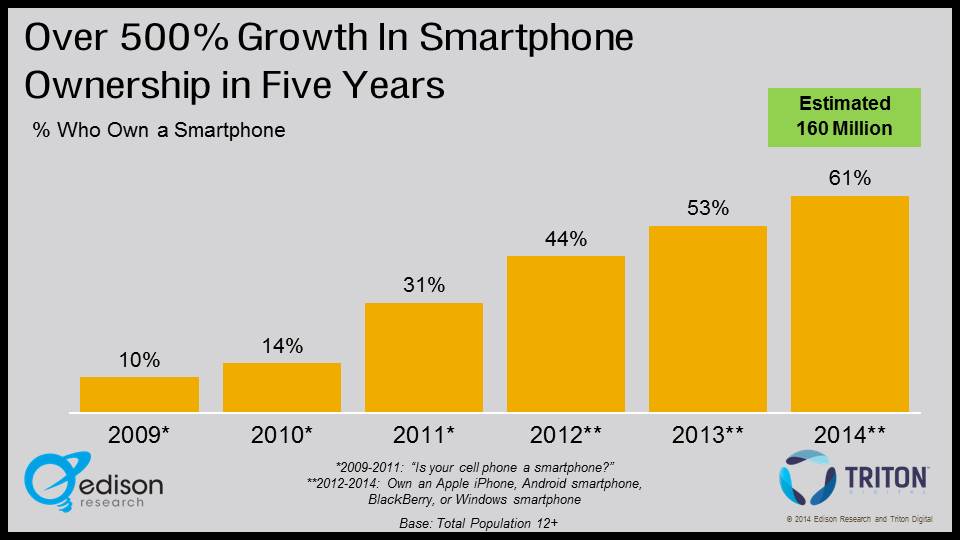
According to the Infinite Dial 2014, 61% of Americans 12+ now own a smartphone—up from 53% in 2013 and 44% in 2012.


If you’re still routinely complying with rules let over from the last century, it’s time to reassess how you spend your time talking. 
  • Give the time.
  • Mention the weather.
  • Talk about traffic problems in real time.
.. but, today, you better add value as well.  Those things have become generics.

Start with the assumption that the majority of listeners already know what you’re about to say and enrich it with a new perspective.

Longtime Texas air talent and personality coach Tommy Kramer calls it adding more camera angles to every scene.

Thursday, April 24, 2014

Stop Doing These Things

Listeners do love trivia and so they always say they love it when asked in focus groups.  Should you do trivia?

What about…
  • Today in history?
  • Joke Of The Day?
  • The daily wakeup call
  • Birthdays?
  • Anniversaries?
  • Lost pet announcements?
  • 50’s-60’s-70’s TV theme beat beds
  • The morning classic /oldie
Unless you can do it in a unique way that brands a unique, memorable benchmark, don’t do anything that sounds like everyone else would do it.

As Powerful Radio advocate Valerie Geller admonishes us all:  “never be boring.”

Thursday, February 13, 2014

What's In It For You?

When it comes to excuses on "why I don't need to do that," I've heard them all.

1.  "I don't need to do remotes or other personal appearances.  It kills the theater of the mind I create.  I'd prefer to use the magic of radio and have them picture me the way they want to.  If they meet me face to face, that's gone."

Nice try.  My theory on this one is that this person is naturally shy and insecure.  Maybe they got into radio so they could be outgoing and be themself without ever having to face rejection.

As their manager/coach, assure them that everyone is insecure and shy and those of us in the entertainment business can't be as successful as our potential if we don't face and overcome that demon.

Sometimes you simply have to force them out of that comfort zone, placing a set number of remote broadcasts and public appearances in their employment agreement so they have no choice but to do them if they want the job.

Make them get out in front of the broadcast desk close to people, looking each listener they meet directly in the eye and repeat the listener's name as least three times as they interact with them. 

Often, this alone fixes the problem as they begin to realize that people who come wanting to meet them enjoy their personality and they have nothing to fear.

2.  "I don't do social media.  My entire show is social."

No, it's not.  It's a broadcast.  If you get too personal on AM/FM radio by playing every request people ask for, using every phone call you get on air without editing them, your ratings are going to go down because your show will be loved by the folks who call, but boring to the mass audience.

If being on the radio for you is just to have people call you and tell you how wonderful you are because you do your show just for them, you're never going to be as successful if you talk to everyone, but do it with a "one to one" vocabulary.

Your task when the microphone is open is to curate everything that is going on right now.  Choose only the best material and maximum value to the listener who chooses to sample you.

Keep them listening longer by being as entertaining and engaging as possible.

Use all of your social tools to build those personal relationships one person at a time.

Tailor which social platforms you use to the tastes of each individual listener.  Use them all, but don't broadcast one post to all of them.  Consider what makes a user of each platform choose that one and make sure they know you understand what makes them unique and special, not just a number in your database.

Need a good example of how this is done?  I have one word for you:  Ellen.

If her great example along with those intellectual/logical explanations don't work, I go for the jugular and tell the personality that failing to use every medium at their disposal in exactly the way its users expect will cost them competitively in the ratings.

To #1:  if you don't get out into the community and also use social and expect the audience to grow every day, you better be the most consistently entertaining personality available to your target in every minute of every day so that they never get tempted to try anything else.  Cume is always going down unless you work hard to keep it growing.

To #2:  If you knew exactly who had ratings diaries or was carrying a Personal People Meter right now, wouldn't you want to take extra care to find out what they are doing, what they like and dislike?

Try this experiment:

Go to the mall and randomly ask people if they have ever participated in the radio ratings.  If you ask 100 people, you'll be lucky to find five who say yes.

At your next public appearance or remote broadcast, ask the very same question (do NOT do it on social platforms or you'll probably get delisted!) and you'll find that as many as one in ten (or even more) answer in the affirmative.

The point is not to do stealth marketing, but to prove to your recalcitrant talent:

The people who reach out to you socially and come out to say hello to you are more than twice as likely as the average person to participate in the radio ratings when they receive that call.

Don't you want as real and close a relationship with them as you can possibly have?

Tuesday, February 11, 2014

Impersonally Personal

Creating universally relatable emotional experiences driven by personal stories:  that's what the best of AM/FM audio media does to engage more than 90% of the population every day of the week

You can only do that by talking to as large a cume audience as possible - one person at a time - when the microphone is open.  That's called intimacy, and it's our greatest strength.

Each listener feels that you are talking only to her personally, even if he is riding in a van pool with six others.  At some level, they know they are an "audience," but due to theater of the mind it feels like you're talking only to each individual.

When the mic is off, all other hours of the day, live appearances and social media require a completely different approach.

Change gears.  Genuinely talk to each person.  Listen to his story, being as personal in response as possible.  Make each individual who "likes" and "follows" you feel as if you want to get to know him by name, face to face.  This is what makes being an AM/FM personality so important.  As a bonus:  it feels good to do.

There is no other medium that can equal the real, enduring relationships built on mutual trust that doing it consistently well creates.

Tuesday, November 19, 2013

Riffing, Radio And Restraint

When you're extremely talented at something it's very tempting to press your advantage and show off a little bit.

Nashville-based performance coach Tom Jackson advises his clients not to just do a carbon copy of their hit when on stage, but to change someone's life by creating a larger than life experience


Nail that In front of a live audience and you get immediate positive feedback, perhaps a standing ovation.

That can make it very tempting the next time you are in the recording studio to overdo it in the same way, but a savvy hit record producer will ask you to tone it back down, create a more intimate and personal experience, one that can be listened to for a thousand times, becoming more potent which each listen.

Great radio personality isn't a stage performance. 

It's one to one and time is precious.

The difference between good and great on radio is not how long you can do the things you are best at, but how quickly.

No matter how large your radio station cume is, it's best to reach it all - one at a time.

Thursday, October 10, 2013

Only Seven

According to Christopher Booker, there are only Seven Basic Plots
  1. Overcoming the Monster
  2. Rags to Riches
  3. The Quest
  4. Voyage and Return
  5. Comedy
  6. Tragedy
  7. Rebirth 
His convincing book is really much more than that hypothesis, making it very much worth a careful read.

He explains how and why we are all programmed to imagine stories in these ways and also why storytelling must be a part of your bits, ads, newscasts, branding, marketing and social media

As you read it, you'll ask yourself:  does our radio station and its personalities consistently make full use of every one of them for maximum impact?

Daily prep should begin by evaluating everything you "could" engage the listener with through the filter of how can we make sure today's "show" has all of them woven into it and which character on the team is best suited today to bring one or two of them alive authentically and naturally.

The more believable characters living through and coping with them, the more viral you'll be!

Thursday, May 30, 2013

Does Anyone "Binge" On Your Blog?

In the news:
I will leave it to smarter minds than mine whether waiting until the weekend to gorge on one whole TV series by viewers is good or bad for the future of Netflix and all of traditional media, but this much is clear:  creating something so delicious that the audience can't wait to fully savor it all in one lengthy session is greatness defined.

Are you podcasting and blogging every day?  Is it so terrific that your listeners make a point of coming to your website or through social media to savor everything you created this week?

If not, as good as your traditional ratings and audience shares, your content isn't good enough to compete in what is certainly to become tomorrow's media.

Heck, if you're not reading this material every single day, MY content isn't good enough either.

I'm working on it.  How about you?

Saturday, May 25, 2013

Connect Personally And Keep It Real

For the last few days I've been sharing info-graphics from "State of Listening in America" which haven't gotten press coverage and yet I believe impact you very directly much more than than "good news" headlines picked up by media the day after the New York data presentation.

1.  CONNECT PERSONALLY WITH LISTENERS

Listeners have deep affinities with DJs and value the time spent with them.
2.  DJs ARE CONSIDERED CELEBRITIES WHO KEEP IT REAL”


Listeners expect a lot from us.

How have you delivered on those hopes in the last few minutes on your air?


Thursday, May 02, 2013

Terrestrial Radio

Another from my intermittent series of "Trachman treasures:"

As opposed to radio that's bounced off a satellite or grabbed from "the world wide web."  In other words, "us." Or, what's left of us.

Somebody expects us to need a descriptive word in the near future. It reminds me of "the private sector" - which, by implication, legitimizes every business the government cares to get into.

It used to just be "business." It used to just be "radio."

Well, fellow terrestrials, what can we do to ensure our survival in an era when we're just one segment - perhaps some day, even a minor segment -- of all the radio that's out there?

Come close and listen carefully; I have a plan.

Here are six ways we can survive this new competition, or any competition:

1.  Listener and community involvement.
This is radio's most natural turf. Talking about, and participating in community events on the air.
Instructing DJs to use packaged material only as a back-up. The main source of raps should be about the DJ's life in the community, and how he or she responds to it. Encourage him to talk about his children's school; the local athletic teams, the traffic on Main Street, the colorful late-night movie host on TV, the latest campaign to clean up the downtown area.  Encourage some expressions of opinions; it doesn't matter whether everyone agrees or no one does. What you need now, above all else, is live humans behind the mike. Start a station campaign that reflects a community wish or un-met need. Any time some big event is going on in town, don't just send a news team to report it; send staffers to participate. The goal is to make your station central to everyone's perception of the community.  Be there and be visible!

2.  Timeliness.
Another of radio's inherent strengths that we've ignored.  Jocks should be informed, not just about what's going on in the community in general, but also about what's happening at this minute. On an elementary level, every DJ on the air should pop his/her head out the window once an hour, to see if (regardless of what the forecast says) it's raining. Or fogging or snowing. Or windy or partly cloudy; if the sky looks "ominous" or "glorious" or whatever else. But timeliness is not limited to weather. Are there local streets blocked off today because of construction or a parade?  Is some recording act appearing in town today (even if the competition is sponsoring them, it's still your town)? Music is generic.  Real personality is specific to this place, at this moment.

3.  Real personalities.
"Where can I find some?" asks the GM. Well, you grow them. You hire people who are passionate about life, and teach them how to do it within the confines of a radio format. (It's what Jay Trachman  wrote about every week of his life as long as I knew him.) Helping to develop and guide them is part of what he did, and now I do. If your management needs help, have them email me. I have a dog-eared old copy of "The Art Of Personality Radio," I'll share with you.  (Really.)

4.  Identity.
Your station should be perceived as a "thing," an identifiable entity that stands out from everything else in the market. And the fact that you play twenty Classic Hits in a row isn't going to do it for you, any more than saying the right liner cards will. Not for much longer.  What is your station "about"? What sets it apart -- that the listener can perceive -- from everything else available?  If the music you play is the only answer you can give, you're headed for trouble.

5.  Promotions that cause chatter.
Ask programmers to tell you their favorite contests, and many respond by telling you about their biggest or most unusual prize. The contest itself should be fun to listen to, and make your listener want to share the experience with others. When it all comes down to the competition saying, "The fifth caller wins $1 million!", your station ought to be someplace else.

6.  Being fun to listen to. 
I believe a station becomes fun to listen to when it is perfectly obvious that the DJs are having fun themselves. You can't mandate it; "Have fun, or you're fired." But each of the items above helps build an atmosphere of fun for the performers. When they're involved with this community on this day, participating in the life of the listener, expected to be creative, invited to respond to events, I think you'll find most of your staffers are having fun on the air, and that's contagious. As Jay mentioned over and over again for as long as he lived and wrote, "Having Fun Is Good For You."

Monday, April 15, 2013

It's Only Words

That search delivers "about 1,390,000 results."
So, before you open you mouth and mic today, click on a few of these links, for example, and try not to be a stereotype.

Dan O'Day famously says, "if everyone does it, it's probably wrong."

I'd like to add two more phrases to the lexicon:
  • "More details..."  Is there anyone who is anxiously waiting for more details in their life?
  • "That wraps up..."  An excellent way to remind your listener that it's a good time to stop listening?
Crutches come up in your content when you stop thinking about what you're really saying and just put your brain on auto-pilot.

It's audio, so all you have is words.

Choose yours well.

Saturday, April 13, 2013

How to Trick People Into Thinking You’re Good Looking

You can't be Jenna Marbles. 

There already is one, and thanks to You Tube, the 26-year old was just called "the future of celebrity" by The New York Times, and employs every tool at her command to drive more than a million views every single day and more money than she had ever seen before in her life.
"She is a D.I.Y. digital entertainer who conceives of, stars in, shoots, edits and uploads her own videos — often in a single day."- NYT writer Amy O'Leary

You can learn from what she does.


“My perspective is to think, ‘I just have a lot of Internet friends.” - Jenna Marbles
  1. She skillfully juggles Facebook, Twitter, Instagram and YouTube to build a deeply loyal connection with fans who find her eminently easy to relate to. 
  2. Her mom is a Rochester-area marketing consultant, so what she does isn't an accident.
  3. Unlike other YouTube personalities who invest in better cameras, lighting and production values, she has stuck with her original lo-fi operation.  It looks "real."
  4. She polls her Facebook fans for ideas
  5. She does impersonations.
  6. She rants.
  7. She plays off gender dynamics.
  8. She undermines her camera-ready good looks for the sake of comedy.
  9. She starts mini-memes.
  10. Her videos typically last five to eight minutes.
“What I get to do is have fun in my house, by myself, and put it on the Internet.”

That's a top ten "to do" list and an effective mission statement for anyone who wants to do "You Radio" too, don't you think?

Wednesday, April 10, 2013

A How-To Course In Using Twitter To Prep Your Show In Under Two Minutes

Twitter's 140 character discipline is honing the pace of everything.

Author and Daily Show co-creator Lizz Winstead told MSNBC's Alex Witt recently how she uses Tweets to improve and write her show.


Visit NBCNews.com for breaking news, world news, and news about the economy

I will let you decide whether to stop her lesson at 1:40 in (and avoid the political edge that comes after it), which is pretty much the sort of jokes you'd expect to hear from Lizz on stage, in her books and coming out of the mouth of John Stewart.

Friday, March 15, 2013

When's The Last Time You Evoked An Emotion In The "Red?"


Billboard Top 40 Editor Mike Stern at A&O&B's Pre-CRS client seminar at the Country Music Hall Of Fame encouraging us to broaden the range of emotional content on our radio stations:
“Be a friend and a companion. Be a filter, give them something they can steal to use themselves, and focus on things that make you react.”

Thursday, March 07, 2013

Yet Another New "Job Description"

Here's the next "Enlarged" Title after GM and Program Director.

Let's face it, the folks formerly called "listeners" (if they ever actually were really listening as intently as our talent felt they had been) clearly don't have the time or interest to pay attention to anything that doesn't immediately concern them right now.
DMR/Interactive COO Andrew CurranBack when AM radio played the hits or more recently when Howard Stern ruled morning drive, the term "listener" adequately described our audience.  In today's digital and mobile environment, we have an opportunity to think about our audience in a new way. They are no longer just listening to the radio. They are commenting on it, promoting it, creating it, sharing it, evaluating it, and talking about it. 

He just got the ball rolling yesterday by setting up a new LinkedIn group "Audience Evolution," (click to join it) facilitating a conversation that will help strengthen the relationship radio has with our audience and our advertisers.

One of the first posts to the group came from Arbitron Director of Programming Servicess Jon Miller:  "We should take a cue from other industries and start thinking of our target audience as consumers, not just listeners."

Others: 

Thom RogersBusy and doing at least one other thing.
Jim RobertsRadio should take a tip from the software industry where consumers are called “users.”
Add your voice to this conversation so your "listener" doesn't become "apathetic, uninterested bystander."