Showing posts with label Talent Tip. Show all posts

Monday, October 27, 2014

Is Country Radio Too Dependent On Music?

NuVooDoo's strategic researchers have been sharing their radio format national perceptual trending on their blog for several years.  Recently, they've been probing the aspects of programming which "delight" the typical format listener.

If you ask what it was that surprised them other than a song, the answers tend to be contest prizes and funny morning show bits.  Well-designed contests hit the mark, as does genuinely humorous comedy.  While listeners rarely cite being pleasantly surprised by station imaging, we’re certain that there are instances of that among the 37% overall who were surprised in a good way by something other than a song in the past week.
   -- Leigh Jacobs

Pop CHR ranks #1 in its ability to please the audience with music and country comes in a close second in that measurement.


However, when they dug into the most pleasing non-music content, country radio ranks next to last when compared to eight other music formats.


Even worse, country's most pleasing non-music surprises come about once a month, compared to the other format listeners who get their surprises daily or at least weekly when compared to our P-1 listeners.

If the passion for country's music softens, as it historically always has about once a decade for every music style, almost all other formats are better positioned in the minds of their core in contest prizes, funny morning show bits and other program elements besides music images.

There's never a better time to measure your station-specific performance in driving usage and loyalty with non-music content than right now.

Sunday, September 28, 2014

Three Parts Of Prep

The last in an enduring series written by my friend and hero, Jay Trachman:

One of the nice things about teaching is that it helps one to organize his own thoughts. While explaining to a Jock Doc student recently about how to create Life Content, it occurred to me that the process has three distinct parts, which ought to be kept separate, lest they pollute each other.

Life Content: you, talking about your own life; Sharing the little emotion-causing experiences with your one listener. A lot of them seem so trivial when you're experiencing them, that you forget them by the time you're on the air. Yet these are the kind of raps that individualize you, reach your listener, and bond you to him or her.

Part one of the process is "research": gathering, "standing outside yourself" and noticing that something just caused you a significant emotion.

Then, "getting it down," saving the thought until you can deal with it more thoroughly. The best tools for doing this are a pocket pad, a microcassette or mini-sound recorder. When something happens that you think you might enjoy Sharing with your mate or your best friend -- make a note of it!

You see, when you're talking to someone in real life, the two of you go back & forth in conversation. Eventually, something will remind you to mention the experience in question. When you're talking with your listener, you get no such outside cues; you have to do all the work. That's why you have to make the notes. My own, collected over the past few days: "hummingbirds" ... "wind while biking" ... "radishes."

The second step is your show prep. Here you take the notes you made, and flesh them out into raps. "We've got hummingbirds in our garden! I never saw one in my life until yesterday, except in books, and I'm out watering the garden when all of a sudden, this thing that looks like a fat butterfly swoops in and *stops*! I mean, he's hovering in mid-air, wings beating a mile a minute, this pint-sized miracle, right in front of me! Then off he goes! For a minute, my heart was beating as fast as his wings!"
  • "Did you ever notice while biking, that you're always pedaling into the wind? Whenever I go to the post office, I can feel the wind in my face as soon as I turn the corner, and I always say to myself, 'Brisk wind today; it'll be nice when I'm coming home...' And then when I'm on the way back, instead of a nice tail-wind, it's still blowing into my face... Because, obviously, there really isn't much wind; it just seems that way when you're pedaling... Sometimes I think life's a little like that, don't you?"
  • "I guess this is the end of the cool-weather crop season; my radishes and lettuce have both started to bolt; we're picking them as fast as we can, but they're still setting flower heads; one of the radishes blossomed overnight -- which means it's no longer edible, right? Right. Another little lesson, learned the hard way -- pthbthbthbt!"
Notice how I've led to a feeling at the end of each bit; with any luck, you (or my listener) experienced some feeling in response. That's the whole reason for doing the bit.

Now comes part three of the process, and I can't over-emphasize the importance of keeping it separate from the other two: the editing. You don't ever want to be editing while you're gathering or writing, because it shuts down the creative process. I'd rather throw a bit away later, than miss one because my "censor" was working, and I told myself, "Naah -- that's not worth Sharing..."

Editing means taking the bit I created, then examining it to decide which details are necessary to set up the ending ("kicker") and which just add time. Also, does the structure set up the ending? Does the kicker express my feeling strongly enough so there's a good chance my best friend will respond?

The research is your life... The prep is taking your experiences, identifying the emotions you experienced, and figuring out how to make your best friend feel something, too... The editing is making it fit within the format requirements of brevity and structure, making sure the kicker is strong enough. These are the three distinct parts of creating raps. Keep them separate. You'll enjoy the process more, and find yourself working more productively when you do.

Wednesday, September 24, 2014

Learning From The Students

On April 28, 1949, WGRE-FM was the very first ten watt educational radio station licensed by the FCC.  Its first official broadcast was a tribute to the President of DePauw University at the time, Clyde Wildman, who was unable to attend the inauguration of the new radio station because he was in the hospital at the time.  The students operating the radio station presented him with an FM receiver so he could hear the ceremony from his hospital bed.

The station’s programming has been worth listening and paying attention to ever since.

For example, this decade-old Operator’s Manual (pdf) which is still well worth emulating as you discipline and train your talent.

Tuesday, August 19, 2014

The Wrong Profession

I don't care so much about the ones who won't do the work; the people who sign up with The Jock Doc, pay their money and expect that just by talking with me for fifty minutes a week, they'll somehow improve.

No, the ones who really get to me are those who practice and think and do their assignments, and yet, after six weeks together, I'm pretty sure they'll never make it as radio personalities.

I'd be the last one to tell them that, and it's not because I'm afraid to hurt their feelings; it's because there's an old radio truism: everybody in this business, me included, has had one person along the way to say to them, "You're never going to make it in radio." I don't want to be that person in anyone's life. I don't want anyone spending the next ten years proving me wrong. Sometimes those students I fear may be "hopeless" just may find their stride, just may overcome their problems, just may end up highly successful radio personalities. I can be wrong.

In cases like these, I want to be wrong.

That said, I'd like to review some of the characteristics I find among jocks that makes me reasonably sure they're in the wrong career...

Foremost among these are people who can't speak well. Radio seems to attract them, almost as though they sense they have this small speech defect, and are determined to have a career where their success will prove there's nothing wrong with them.

It's uncanny how many entry-level jocks you hear who can't pronounce the suffix "ing." Pointing it out doesn't help much; try as they may, it always seems to come out "een."

I don't think it's a question of motivation or will. No, I have to believe that there are some people who are physically incapable of saying "ing." Is it because their motor control is somehow flawed, or could it be a perceptual problem that springs from the way they hear? I really just don't know.

I want to avoid spending much time teach people how to talk. My principal thrust is to help you focus on whom you're talking to and how to reach him/her. Nonetheless, there I find myself, working on pronouncing words, instead of on conveying thoughts. It seems, so often, like a hopeless task.

Can they succeed in radio?

Maybe -- if they're unique enough, appealing enough -- sure; I'm willing to believe anyone can make it if he or she has enough talent and individuality going for them. But that's not the way I'd bet...

There are others you hear once, and just know they're in the wrong profession -- or at least the wrong area of it. These are people who are emotionally flat, for instance. Often they're lovely folks. They just don't excite you. They operate at a lower level, emotionally. Successful performing, be it on the stage or behind a microphone, requires a high level of emotional expressiveness. Some of it gets lost in the transfer, so that unless I start out more emotional than "normal," by the time you perceive it, I sound flat.

You can tell these people they ought to be more emotional, but if they're truly operating at a less excited level than you or I -- as opposed to just needing permission to express what's really there -- all you get is more sing-song speech, which sounds a little less than credible. Like the way you sound, after the PD has told you to "pick up the pace."

Not everybody is cut out to be a radio personality. It's hard to know who just needs more time, and who ought to quit before he or she wastes any more. Often, these people, who are hard-working and dedicated to radio, eventually end up in sales, engineering and management; I think that's great. I'd hate for our business to lose anyone who cares so much about it.

Sometimes years go by before they realize, on their own, that they've been kidding themselves; we waste so much time growing up. My only point is to get you asking yourself these questions: "Given enough time and hard work, do I have the talent and the physical abilities to earn a good living as a radio personality? Or is there some fundamental problem which will hold me back, no matter how hard I work at it?"

The answer requires a great deal of self-honesty. But then, so does success as a performer.

    --by Jay Trachman, circa 1995 

Get More Remotes/Appearances

Talent fees can be a nice “extra” bonus, and it seems like certain air personalities have a few secrets that make them the one that clients request more than everyone else.
  1. Ask for a tour of the business in advance.  You’ll be better able to talk about ‘behind the scenes’ stories you pick up.
  2. Find out direct from the boss/manager what main points they want to make during your broadcast.
  3. Never ask “how’s it going?”  Seldom will a client tell talent that things are going terrifically and they are making tons of money.  They’re afraid you’ll ask for a higher rate next time.  Asking for “strokes” during the live appearance is just setting yourself up for a negative.
  4. Become expert at “small talk.”  Be positive.
  5. Schmooze the employees of the business.  If they like you and feel you did a good job, the boss will probably hear about it.
  6. If you’re having fun with their customers, the employees at the business will notice.  Your gig is to create an atmosphere where folks are enjoying themselves.  When they are, they’re more apt to spend some money.
  7. Don’t hoard the key chains, coloring  books, refrigerator magnets, six packs of soda, etc.  Offer them to the people who came out because you asked them to.  You want them to perceive you as generous and giving.  The freebees should be handed out by the air personality and no one else.  Make them the last thing you put away after the broadcast ends.
Commercial appearances are not the time to do stunts.  It’s simply an opportunity to do informative and entertaining live spots from a remote location.  Use the built-in ambience to enhance your cut-in’s.  Create some excitement.  Show your personality in the confines of something that’s usually a tune-out.

Achieve that, and you'll make them more effective.  That's how to get invited back many, many times.

Tuesday, July 15, 2014

Birthdays, Anniversaries And Such

Two decades ago Jon Coleman released morning show research his research company had done at a national broadcast convention.

The specific percentages have changed over the intervening years, as this more recent Coleman graphic shows, but the ranker of interest in entertainment elements still rings true along with the finding that listeners normally recall no more than two to four elements, so making the most of the ones you choose to do becomes imperative.

Highest interest (more than 2/3’s agree):  Off beat stories, Humor, Trivia, Fun joking back and forth between appealing characters

Less than half of listeners said they like:  Spoof songs, Making fun of local personalities, Off color jokes, Impersonations of famous people

Fewer than one in five are positive about:  Talking about personal experiences and Birthdays

Why is it that even talent who “gets” that if they talk about themselves the content needs to be especially relatable - like even Garrison Keillor - still feels that it’s acceptable wasting valuable time with an element - birthdays - that anyone who has been paying attention for the last 20 years ultimately knows that more than 80% of listeners don’t care about them?

People call and write and ask.

It’s hard to say “no” when someone does this, especially if the precedent has been set that you’ve done it for other people.

One of the most popular features of social apps is wishing friends a happy birthday, but of course Facebook is many to one whereas radio is one to many.

It takes courage and advance planning to make sure that your content is superior to anything else available on radio right now. 

One way to wean an audience from a bad habit like calling to ask for requests and birthdays:  never use anything with less than majority appeal that can’t also carry with it an off beat story, humor and solid rapport.  Even something as statistically popular as a crutch like trivia gets better when it contains those ingredients.

If you prefer to be imaged as a talent who stands up for radio's grand past traditions that the majority of us have long ago left behind, be like Garrison and do it with plenty of hot buttons included too.

Monday, July 07, 2014

The Eight Day Grid

The legendary Ron Chapman at KVIL/Dallas pioneered this approach and personally achieved the kind of legendary long term success to prove it works.

Keeping content moving forward, pulling listeners deeper into the day to day by using an eight week planning grid on your content map.  Set up benchmarks and content in one quarter hour and then advance it tomorrow in the following quarter hour.

Never repeat a benchmark in the same quarter hour two days in a row.

Using the eight day grid means that it will be many weeks before ‘the same thing happens at the same time on the same day.”

Once listeners figure out that by listening just one quarter hour more each day, the payoffs happen and the narratives advance, the sense of spontaneity builds regularity, improves time spent listening and grows loyalty.

Thursday, June 26, 2014

Something To Say

Jay Trachman wrote this in August 1995 and I think it's still relevant today:

I heard the Classical version of the "paid-by-the-word" jock this week:  "That was the Piano Concerto #1 in the key of B-flat minor, Opus 23, by the composer Peter Ilyitch Tchaikovsky..." He's soul-mate to the jocks who say "Ten minutes before the hour of 12..." and "The temperature in Metroville is 79 degrees; the temperature in Burbtown is 77 degrees and the temperature outside, right now, is 78 degrees, looking for a high today of..." (We know it's degrees and if we didn't, we knew it after the first time... and we didn't think you meant the temperature inside the studio!)

Where did we get the idea that adding unnecessary words makes us sound better? Unless your audience is mainly people who speak English as a second language, the opposite is true. The fewer words we can use to ourselves, the more significant things we can say and be heard saying.

These people are first cousins to the jocks who read the sports scores -- all the scores -- because it's something to say... regardless of whether any of his/her listeners care about the teams involved... And to the ones who read both the local and regional weather bureau forecasts verbatim, followed by the extended forecast, God help us, all in the name of "something to say." Add to this group the ones who "pound home" the station slogans and positioners -- often adding one or two of their own -- more often than they're required -- because it's "something to say."

These are some of the more obvious over-talkers, but there's a more insidious form of the same sin: writing your own raps, and then failing to edit them for word efficiency. If a bit really takes sixty seconds for the setup, body and kicker, well, okay... But if it could be done in fifteen -- you've just wasted enough time for another whole bit! No wonder consultants like Jaye, Mike and Becky come in and shut these guys & gals up! No wonder you often get the impression there are only two kinds of jocks -- those who have nothing to say, and those who won't shut up!

Here's a clue: you are not paid to talk on the radio. You are paid to provide entertainment and information to a listener. The information, in order to be worthwhile, has to be something of likely interest to your listener. If there isn't any, why give it?  If it takes ten seconds to convey, how will you be perceived, when you take thirty seconds to say it?

"When am I supposed to do my entertaining?" jocks ask me. "The PD doesn't want us prattling on during stop sets; I've got to do the weather, the positioning statement and maybe a PSA and then it's time to get back into music!"

The secret is in compressing your words. Don't say the conditions three times in your forecast, if they're going to be consistent through the period: "Cloudy through Wednesday..." does it just fine, and is more likely to be heard and understood, than "Partly cloudy today; partial overcast tonight; then partly cloudy tomorrow..."

PSAs can be compressed routinely. Then, when you get one you really relate to, you can take the luxury of expressing some emotion about it, without appearing "too wordy."

This is such an easy problem to fix. All you have to do is believe in the concept of word-efficiency, and listen to your own air check once in awhile.

You can hear the wasted words. The next day, eliminate them. Oh, you may find a few hanging on because they've become habit... But over the course of a few weeks, listening to your air checks daily, you can wash them all out.

It's a principle newscasters have discovered, but a lot of us never seem to have caught onto the lesson: the shorter you make each bit, the more time you have for others. The more you compress each routine informational bit, the more real entertaining you'll have time for. And the less likely that you'll be perceived as "too wordy."

Monday, June 23, 2014

Another Day, Another Form

If you've been reading my blog for very long, you no doubt know that I love forms.  They organize and create systems, making for consistency.

Here's a good one 97 Country/Lakeland PD Mike James created back when he programmed WQIK/Jacksonville:


I am sure Mike, always competitive, has come up with much better ones than this many times over, which is why I feel free share it now with you. 

We all get in ruts after doing the same things for too long.

Is it time to suggest a new prep form for your team?  Sometimes that's all it takes to reinvent and refresh for presentation and content.

5 Ways To Build Loyalty To Any Radio Show

From old pal Cliff Dumas who doesn't call himself a "talent coach," but prefers "talent mentor:"

1.    Every break in PPM stands alone, so each break must be a positive, fun and entertaining experience for the listener .
2.    Create memorable benchmarks for horizontal, day-to-day listening.
3.    Build ideas around personal and pop culture topics that create talk. Innovation fuels greater occasions of listening.
4     Develop short term "story arcs" around relevant content that carry people to the next day. (Can’t be missed moments) In PPM, listening longer is really about occasions of listening verses lengthening time exposed on a certain day.
5.    Seize moments and discover opportunities to reflect and showcase our characters through relevant news and pop culture events relatable to all.

I'll have a good form to use as you evaluate these things tomorrow.

Wednesday, June 18, 2014

Every Voice On Your Radio Show Must Agree On

  • Who’s the leader?  You can't be Letterman, Colbert or Katie Couric.  Be who you are, but if you are the lead character, set the tone for the entire program, control the content, production values and momentum.  You can’t win if two players of your soccer team acts like they both are the goalie.
  • Who’s the sidekick?  This is an extremely important role that might even get as much or more mic time as the lead character, but Fred Armisen doesn't try to be Seth Meyers.  Roots takes their part very seriously but never forgets that it's Jimmy Fallon's show.  This may be a more difficult role that playing the lead, requiring quick wits and restraint.
  • Who plays the foils?  This person may not even be a full time employee.  News? weather? traffic? sports?  The more people involved in your performance, the more important that the leader understand the role of ringmaster isn’t to take too much time, but to seamlessly glue the pieces together.
  • Individual vocal character for everyone.  Who listens to be sure it's always clear who's talking and people aren't talking over one another?
  • Humor, especially jokes:  don’t do them unless it feels comfortable and natural.  One person needs to make that call, directing relevance to the target, locale, pacing, production value, theater of mind, in’s and out’s -- to be sure a fistfight doesn’t break out with the mic open.  A bar fight may be fun once in awhile, but not as a way to bring the average person back to "your place" day after day, hour after hour.

Monday, May 12, 2014

Your New Fall Season

The news Friday that ABC-TV has renewed "Nashville" for a third season with a full run of 22 episodes hopefully comes as a reminder that summer is the perfect time of year to plan for "what's new" in the coming year on your show and radio station.

Rayna Jaymes (as the show's website points out) "suddenly discovers her passion for the business is not enough to compete with the new generation of talent lighting up the charts. She's forced to accept the harsh reality that she’ll have to start over and reinvent herself if she plans on being relevant."


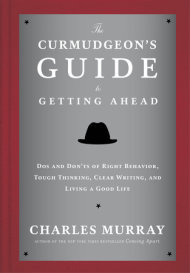
Political Scientist Charles A. Murray chose this graduation season to release his new book citing the film 'Groundhog Day' as another reminder of the need to constantly evolve even as life seems to be an exercise in repetitive experiences.
"Without the slightest bit of preaching, the movie shows the bumpy, unplanned evolution of his protagonist from a jerk to a fully realized human being—a person who has learned to experience deep, lasting and justified satisfaction with life even though he has only one day to work with."  He writes "You could learn the same truths by studying Aristotle's 'Ethics' carefully, but watching "Groundhog Day" repeatedly is a lot more fun."
There's a lot of what we all do on radio every day that seems to mirror Bill Murray's life in the movie.  Same things, same times, day after day.

If you are bored with what you do, the audience most likely is too.

The coming summer vacation time of year for both you and your listener is the perfect time to learn a lesson from what works for television.  Think through all of the things you want to keep next year as well as potential new aspects in your character, personalities, benchmarks.

Be sure that as your listener matures and grows, you're doing so as well.

What are your strengths? 
What would you like to change? 

It's  time to review what you've been doing and ask what you need to reinvent, replace and yet remain as strong as in the past.

Attack yourself!  Find and correct your own weaknesses. If you were a new morning show coming into the market what would your strategy be to beat our current/past show?

What weaknesses would you exploit? What are the weaknesses in your show’s strengths?  Each player needs to have their role definitions re-evaluated. 

Study all show benchmarks and regular features. Put all of them - as talent coach Randy Lane and his team routinely suggests - in one of three categories:

  • Perfect as is
  • Needs improving
  • Discontinue
It’s not enough to be the best today; you have to be famous too. Look for ways to generate media press and talk in the market by making this an agenda point in the planning sessions as you "launch your new fall season!"

Wednesday, May 07, 2014

The Basic Basics

The next in a continuing, intermittent series of Jay Trachman treasures:

Being by The Book always bends me back toward basics. (Too bad alliteration isn't one of them...)

Here are the most basic basics of all, in brief...

1)  Talk to someone.  Not your target demographic; not a picture on the wall or a cardboard cut-out. Certainly not "the great unwashed." I mean a specific individual whom you can count on to enjoy your company. An individual; someone you know, or wish you knew. Someone with a name, a height and weight, an occupation, a history, relationships and feelings.

Intimacy is one of the last few remaining strengths of radio. If we blow it, there isn't much standing between us and iPods, Sirius and all the others we keep trying not to worry about.

Consider: our music isn't as good as what a real music lover can program for him or herself on an MP3 player. Even if it is -- even if a listener likes the mix we offer or is too lazy to "shuffle" his or her own iPod, the great odds are your music isn't discernable from half a dozen other stations in the market. The hottest hits, the longest sweeps, the fewest interruptions -- these are mechanical functions that your competition can duplicate successfully, and probably will. Seems like a hard way to win in the ratings.

Our news credibility has been pre-empted by (the internet and) TV; unless a boob tube isn't available, that's what most people choose for their primary information source these days. The weather: decades of inaccurate forecasts have left serious questions about whether anybody believes them now.

All that's left, besides our local-ness, is our intimacy -- the companionship we provide -- our ability to reach a listener and make him or her feel like they're not alone. As far as I know, in order to achieve that, you *must* be convinced you're really talking to someone.

2)  Have something to say. So obvious. So elusive. Personality radio isn't in trouble because the DJ's talked too much; it's in trouble because we said too little that was worth hearing. Talk about your community, this day, your listener's life and your own. How are you going to sound intimate and real if you never ever Share something real from your own life with your friend, the listener? If all your raps have the same inflection, and you never express a true feeling?

3) Here's the most basic of basic principals for personality jocks, so obvious it shouldn't need to be said:  TIME MATTERS.

Put it on the bulletin board. Tape it to the wall in the control room. My experience is, there's probably nothing that needs to be said *more* to today's personality jocks.

Time matters! You are a guest in peoples' minds. Don't abuse the privilege! Prep your raps. Make them lean and mean. Remember that your listener, fan that he/she may be, still only has perhaps twenty or thirty seconds to devote his mind to you. If you haven't hooked him by then, you're just blowin' smoke.

4)  Stop when you're done. Painfully obvious, again. Every rap ends with a "pay-off" - a punchline or emotional response. It's the one line in a rap that practically needs to be scripted, so you can get it just right. And, so you'll know where you're headed before you even start.

When you get there, you're done! Bam, into the next event! Either the rap has worked at this point, or it never will. There is nothing more you can do, except to establish yourself as insecure and undisciplined. Another thing you don't do is go into another piece of talk -- if you can humanly avoid it. The "one thought per break" rule is as valid today as ever. You can't observe it all the time, but when you violate it, you should have good reason for doing so.

The rules of formatics are often complex; but once you've mastered them, that's all there is, cut & dried. You follow them, execute them, and with any luck, they rarely require much thought. The rules of effective personality radio, on the other hand, are wonderfully simple. Except, the application can take a lifetime...

Thursday, May 01, 2014

Radio Was Easier

Let’s face it.  Doing radio is harder today that it has ever been.
  1. Short attention spans.  
  2. PPM demands for excellent second to second execution with no wasted time that could cause a lost listener.  
  3. More usage of multi-media for music and info that means radio’s once exclusive lock on basics no longer exists. 
Hardest of all these days is self-promotion.  It has never been more crucial to build and own core usage-driving images, but the audience won’t sit still for anything that sounds like a sales pitch.
  1. Writing must be crisper than ever, every bit of production has to improve flow.  
  2. Everything has to be believable, reinforcing values of the target.  
  3. Momentum and brevity should be baked in.
Anyone who still believes that radio was better yesterday or simpler to execute now doesn’t understand the skill level required to be a market leader in 2014.

Monday, April 28, 2014

Why Social Content Is Essential To Every Radio Station

Every conversation (note that Facebook asks "what's on your mind" and then calls them "stories from your friends") is for the benefit of the audience, communicated one to one.
  • Each listener must feel that he/she is part of the conversation.
  • Let the listener tell the story.  Don’t interrupt.  React and respond.
  • Record as many listener voices in advance and pre-edit them.  Radio is an audio medium.  Make the most of sound. 
Sure, encourage text messages, emails and social content, but then call back the best ones and get the person’s voice for use on the air.  Edit them tightly.  Get to the point.  There is no need to punish your audience with small talk like “hello, how are you, thanks for calling.”
  • Think about plot lines.  Edit in advance for a clear beginning, middle and end to each story.
  • Cast the drama with your team’s characters.  Who is best, given their values, to be the generator for this interaction?  The reactor?
  • Feel free to edit laughs and phrases from callers you recorded previously.  It’s show biz.  Reality TV has taught us that compressing a big story line into less time increases impact and power.
Don’t waste a second.

Some programmers will say that's due to PPM.

Actually, it's simply the pace of life today.

Friday, April 25, 2014

Is It Time To Stop Doing Time Checks, Traffic And Weather?

Once essential “basics” of every morning show that were drummed into the head of each personality so that just giving the time wasn’t enough.  You had to do double time sells.  Analog and digital.  Every time.  7:16, 16 past seven.

Reporting traffic and weather every ten minutes wasn’t enough.  We went to “the seven minute traffic and weather guarantee.”  Then, the other guys did too.

That was then.  Now?

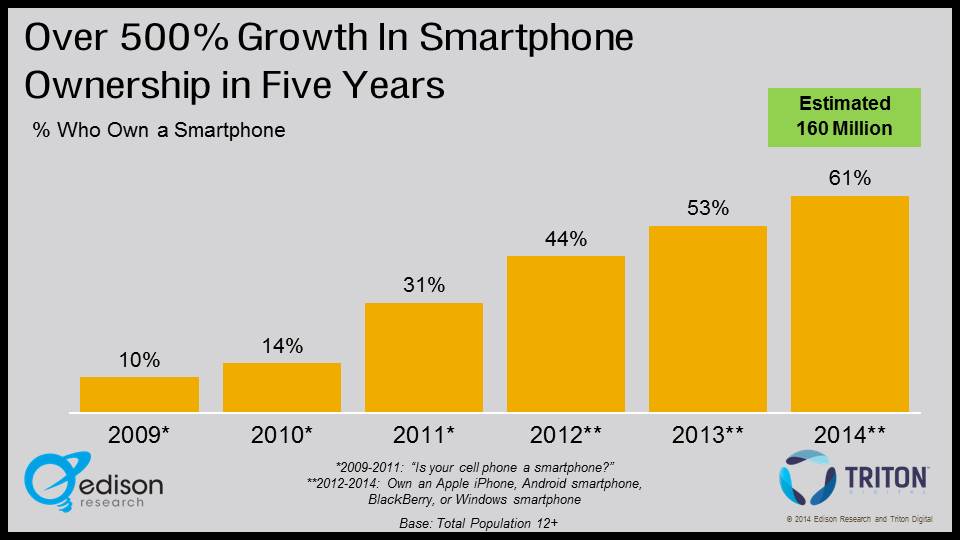
According to the Infinite Dial 2014, 61% of Americans 12+ now own a smartphone—up from 53% in 2013 and 44% in 2012.


If you’re still routinely complying with rules let over from the last century, it’s time to reassess how you spend your time talking. 
  • Give the time.
  • Mention the weather.
  • Talk about traffic problems in real time.
.. but, today, you better add value as well.  Those things have become generics.

Start with the assumption that the majority of listeners already know what you’re about to say and enrich it with a new perspective.

Longtime Texas air talent and personality coach Tommy Kramer calls it adding more camera angles to every scene.

Thursday, April 24, 2014

Self-Improvement

I learned this approach from Cumulus/Nashville OM Charlie Cook:

Every personality should take a legal pad into the studio.

As you go, following each content break, write a shorthand diary that is informative enough so that you can go back over it and understand what each element of the show was.

After you are off air, review the “content map” you created in advance and compare it with what you actually did.

The idea is to learn and talk about what you will do differently as you put together tomorrow’s show.

Classify each individual element under one of three categories
  • Worked.  Use again.
  • Did not work.  Modify and try again.
  • Did not work.  Do not use again.
As time goes by, you’re going to have a huge log of evidence - as judged by YOU - what is acceptable and unacceptable for future morning shows.

The better you become, the better you’ll do!

Stop Doing These Things

Listeners do love trivia and so they always say they love it when asked in focus groups.  Should you do trivia?

What about…
  • Today in history?
  • Joke Of The Day?
  • The daily wakeup call
  • Birthdays?
  • Anniversaries?
  • Lost pet announcements?
  • 50’s-60’s-70’s TV theme beat beds
  • The morning classic /oldie
Unless you can do it in a unique way that brands a unique, memorable benchmark, don’t do anything that sounds like everyone else would do it.

As Powerful Radio advocate Valerie Geller admonishes us all:  “never be boring.”

Tuesday, April 22, 2014

Elements Of Style

In 1920, E. B. White and William Strunk, Jr. wrote a prescriptive American English writing style guide that remains in print to this day.  I constantly recommend it as a way to hear yourself objectively and recognize that the habitual things we write and say are often meaningless hackneyed crutches and cliches.

Two bits of their advice may be all that you need:
  • Use the active voice.
  • Omit needless words
It’s so brief and meaty that you could go to a library and read it all before leaving the building.  Or, right now by clicking on this pdf.

How much do you need it?  Give yourself a score from one to ten on this morning’s show:
  • How connected to your community, using social networks and the telephones was it?
  • Were characters “real” with believable values or just cartoon voices?
  • How many times did you make listeners laugh?
  • How well did the show build anticipation, entertainingly sewing in “reason to keep listening teases” in the thread?
  • Relatablity?  Was there a lot in the chatter that was so topical and local, so unique to your market, that listeners saw a reflection of themselves in your content?
Perfect score:  50.  Most of us, if we're honest, get less than 25.

You are about average, the same as most people you compete with.

Face it:  you already know that you need some coaching on methods to add unique “style” to what you do.

Unless you want to remain "average."

Monday, April 21, 2014

Narcissism

“Narcissistic personality disorder (NPD) is a personality disorder[1] in which a person is excessively preoccupied with personal adequacy, power, prestige and vanity. This condition affects one percent of the population.” - DSM-V

I think the percentage is higher among those of us who have been drawn to speak via broadcast transmitters.

Symptoms:
  • Feel what they say is more important than the music and show it to listeners by talking over songs or telling the audience when they don’t like a particular tune.
  • Drop scheduled songs.
  • Bits go long. 
  • Go to the GM if they disagree with the PD’s suggestions for programming
  • Refuses to attend station events unless they get paid or are the center of attention
Changing these patterns requires a seldom-brief process of helping them become more empathetic in everyday relationships.

Interrupt their sense of entitlement and self-centeredness by guiding them to identify their unique talents.

Encourage them to help others for reasons other than their own personal gain.

If you can actually achieve this, you will have helped this individual in their life and relationships with everyone, not just their radio show.

That's the rare, amazing payoff you get for training yourself to be an effective leader.

It's worth the personal risk, time and effort.