Showing posts with label information. Show all posts

Wednesday, July 02, 2014

Why Do Any News?

  • Satisfy “the friendlies.”  TV’s network morning shows make this their specialty.  Being cheerful, upbeat with great rapport is a must if you hope to compete with them.
  • Welcome “the belongers.”  These listeners have very high family values and are sociable.  Make them feel welcome, a part of your family.
  • Reassure the folks who tend have trouble coping with life.  Bring listeners together to tell their personal stories of hardship and work to help solve problems.  Social media is a great place to do this and then repurpose the most compelling stories in your on air news packages.
  • Shake things up.  If the news becomes too warm and fuzzy, some men will find it boring.  Crime stories, special reports and interviews with law enforcement and victims on the edgy aspects of life can add important balance.
  • Time management.  Keep it brief and fast moving.  Satisfy the people who want no-frills news.
  • Tell the ongoing stories.  Don’t make every newscast identical.  Even if you get in early and pre-write every one, build in “fresh new facts” on an item from thirty minutes ago.  Make your information packages benchmarks for “the longer you listen, the more you know.”
  • Weather and traffic ARE news.  Present them with the all of the above in mind.
"It's an exciting time to be in news.  It's not going away anytime soon, and I approach it every time I get in front of a computer as 'This is exciting. This is not old. This is not boring. ... And the more people involved, the better."  -- Drudge Report's Matt Drudge (on WTOP) via Don Anthony's Jockline Daily

Information is a must for any well-rounded radio station.  What makes it work (or not!) is consistently achieving the right balance of all logical and psychological needs of the listener.

Sunday, June 22, 2014

Weather (Or Not?)

Everyone has a smart phone, so why bother with time checks and weather forecasts?

Sure, we can all hit the screen of our mobile device and get the entire week's forecast.  Yes, it can be set like an alarm clock and it has the time, day and date right there.

So, you should stop doing those things on the radio?

If you do, you simply communicate to your listener that the things they "need" each morning aren't important to you.

Yes, I know it gets harder since "double time sells" (7-10, 10 after 7) probably don't make any sense today.

And, telling me the obvious (clouds today, cloudy tonight, most cloudy tomorrow, considerable clouds tomorrow night) is just a waste of my time.

The basics still apply, but the way you do them, who does them and how can't be as rote and repetitive back when radio was the only source.

Friday, April 25, 2014

Is It Time To Stop Doing Time Checks, Traffic And Weather?

Once essential “basics” of every morning show that were drummed into the head of each personality so that just giving the time wasn’t enough.  You had to do double time sells.  Analog and digital.  Every time.  7:16, 16 past seven.

Reporting traffic and weather every ten minutes wasn’t enough.  We went to “the seven minute traffic and weather guarantee.”  Then, the other guys did too.

That was then.  Now?

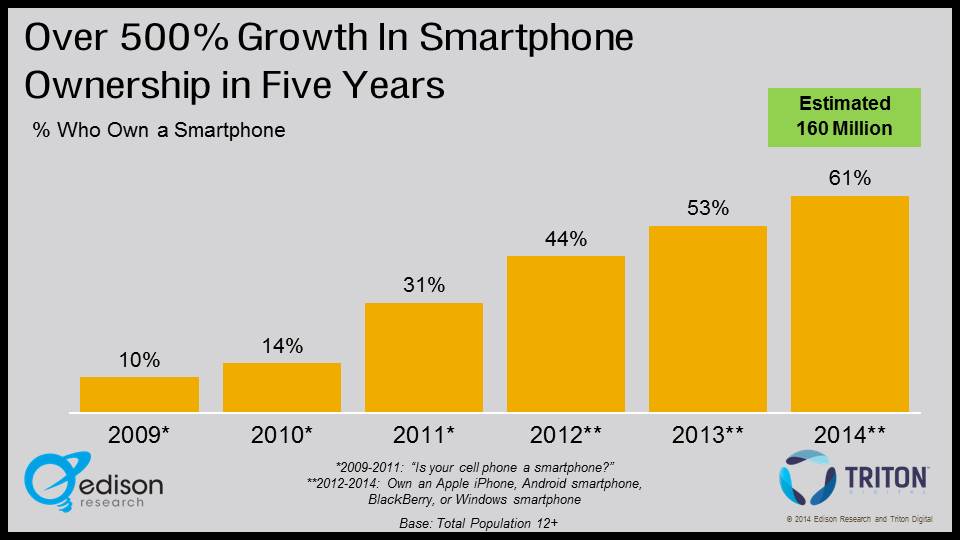
According to the Infinite Dial 2014, 61% of Americans 12+ now own a smartphone—up from 53% in 2013 and 44% in 2012.


If you’re still routinely complying with rules let over from the last century, it’s time to reassess how you spend your time talking. 
  • Give the time.
  • Mention the weather.
  • Talk about traffic problems in real time.
.. but, today, you better add value as well.  Those things have become generics.

Start with the assumption that the majority of listeners already know what you’re about to say and enrich it with a new perspective.

Longtime Texas air talent and personality coach Tommy Kramer calls it adding more camera angles to every scene.

Monday, April 25, 2011

Wow.. TWO Morning Newscasts In Under 4:30!

One of my favorite newspeople has worked in Winnipeg for many years on Astral's QX104.

Boyd Kozak proves that being contemporary and relevant is not a matter of the age of the journalist.

Sure, he's a longtime Canadian radio legend, but "Kozie" lives up to his reputation every morning in his writing, story choices and style. (click to listen to two consecutive recent newscasts)
  • Nine stories in 1:51.
  • Only one story repeats in the two newscasts, the right one.
  • Stories I care about, and rattled through.
  • The writing is excellent.
  • Traffic was perfect "location first" content.
  • And he blew through a two day weather giving me everything I needed to know in 10 seconds.
And, to top things off, he even explains in today's blog post how he's able to do it with some Monday Motivation.

Tuesday, April 05, 2011

Is The Weather Really "Next?"

What's the point of saying "The Weather's next" or "I'll check the forecast, coming up"?

Does anyone have time to wait for anything that relates to everyone pretty much all of the time? I can click on my smart phone and grab a five day forecast faster than you can play one commercial, let alone a whole cluster.

Teasing routine elements with key words anyone can put into a search engine and get immediately simply no longer makes any sense, if it ever did. It's like saying "I'll check the time in five minutes."

Stop with the constant teasing and, if you have something fresh, relevant, important and immediate, just DO it.

Monday, March 28, 2011

Promising Predictions

Beth Knobel:
  • The future of audio reporting is all about the content. Radio not only provides great reporting, but it's also a valuable editorial voice that helps listeners makes sense of the barrage of information that is raining down on us all these days.
  • Radio stations will continue to exist, but they will distribute their programming digitally, and use the money they now spend on over-the-air broadcasting on content creation instead.
  • The stodgy image of radio is changing, as radio stations use social media and other communication technologies to engage their audiences.
  • Radio stations are already moving aggressively into social media. Part of that effort includes obvious things like Twitter feeds and Facebook pages. But that's all going to expand even more, as stations benefit from new, innovative ways to send and receive information.

Imagine that you're on the bus going to work. As you pass a particular building, your phone asks you if you'd like to hear a radio story about an event that happened there.

Then you get a text on your phone from a different station asking you to write back if you're stuck in traffic. The station uses the information to create a real-time traffic map on its website.

Then a Twitter message asks, since it's the 8th day of the month, for you to vote on which of three composers' 8th symphonies you'd like to hear at lunchtime on the local classical music station.

This is the future of radio.

Sunday, January 09, 2011

Bad Weather

The following story is being used here as an excuse to rant again about a pet peeve of mine. It probably won't be the last time I blog about what a lousy job most voices on the radio do relating weather updates.

Last week a client GM sent along this RBR report and asked:
"So does this mean things have changed so much that we should just dump weather and play more music? Don't know if I totally buy this? This is awful for radio."

Michael O'Malley
, always the voice of reason, points out that things may not be as bad as it appears. "Too many questions we don't know about the survey question or sample including what context this is asked in? A poll of who? How was the question phrased? Did they have more than one choice? RBR leaves all that important-for-perspective info out."

However, O'Malley adds: "It's no secret though that for music stations with 18-49 making up at least some substantial portion of the audience composition, the interest in all services continues to decline - markedly so if they're 'formal.' As a listener I can find out about the news, weather and last night's lottery numbers on my smart phone while listening to my favorite song on my favorite station and not have to wait for anything formal. Doesn't mean radio has diminished in my estimation (I'm there for the music, fun, talent, etc), just that I'm not using for these particular services at the moment. We don't see that aspect reflected in this article either.

"'Breaking' however is another story; the interested in 'breaking' is significantly greater. We've also known for a while that TV has taken over in the kitchen vs. the bedroom and car. Be long on organic and short on formal. Program for how I'm being used right now."

That very day, I played morning show airchecks of every station in a client market for for our cluster's crew so that we could all talk about things we must do to stand out and be better. Weather was pretty much the same on every station in town except one (the CHR, the jock did a great job briefly relating it and making it fun). Everyone else was 30% chance of precip, considerable clouds, blah blah.

Everyone agreed after listening, radio's voice tracked approach to weather has become irrelevant. The cluster Operations Manager/PD, as if to make O'Malley's point, pulled out his smart phone and showed that he can get current conditions, temp and even a ten day forecast anytime he wants it.

Yet, we all continue to talk up the same old weather jingles with the NWS forecast verbatim up to a call letter stinger at the end just like radio did decades ago.

Most of us, face it, are pretty much "average" at most of what we do and that is no longer acceptable with anything in a multi-media world of ubiquitous information, choice, personalization, micro-local and customization.

If we can't do info differently and exceptionally, let's stop wasting listeners time with drivel.

Thursday, September 17, 2009

45% Of Newsrooms Use Social Media To Gain Sources

The News Generation survey found that nearly half of the newsrooms (45%) use Twitter and Facebook, to offer their technologically savvy audiences an extension to conventional radio to provide another broadcast platform.

Thirty percent believe that keeping pace with technology and using social media builds listenership loyalty and keeps listeners tuned-in throughout the day.

The majority of radio newsrooms (56%) rely on social media for story leads from “citizen journalists,” and 34% of radio newsrooms say social media not only provides leads but can also provide possible sources of information for news stories.

Tip: News Generation is a PR firm which advises clients on how to get their stories onto our air, and the fact that they are telling the folks they work with to use Facebook, Twitter, et al, means we need to be more skeptical than ever on social media as credible sources.

Thursday, September 03, 2009

Why Have One Emergency Radio When Two Would Be Better?

It's time to ramp up your bad weather preparedness tools and education on air, and the Department of Homeland Security has a great reminder of how key radio can be at those times.

Lasting positive images are built (or lost) at those times, since it only works if your station has a plan to be there for your audience whenever the weather turns bad.

Every business needs a "bad weather plan," especially every radio station.

Include in that plan imaging to reinforce element association to "dependability" and "reliability." Station association to "trust." Encourage listeners to "use" the station with a weather-related call to action "when you need to know."

But, don't promise it if you can't deliver on it, 24/7, especially during the upcoming bad weather months.