Showing posts with label Branding. Show all posts

Saturday, November 08, 2014

Programming By The Numbers

Thanks to Radio Ink Magazine for being the impetus for this article by Mike, Becky and me.  They published it yesterday.  In case you missed it: 

Nielsen’s recent report that for the first time in many years the country format national average shares experienced three down months in a row combined with Mike O'Malley’s almost-simultaneous blog post highlighting the A&O&B national country music database music acceptance trends has to be at least a little concerning for Brand Managers.

My post last week in reaction to just-published NuVooDoo format perceptual data showing that country radio success tends to be more music-driven than other formats, while the highest-rated A&O&B client stations have more personality-driven appeal than our “average” client and at the same time Dan O'Day and Becky Brenner have been enumerating the traits of the very best PDs, all of which no doubt made any sharp programmer sit up and wonder what success factors most deserve their time.

Perhaps (though I doubt it) there may have been a time when a radio programmer only had to worry about how their station sounded and “sounding great” was sufficient to be a winner. 

Even all the way back back to when Gordon McClendon, Todd Storz and radio’s many other creative format and research pioneers of the last six decades attacked existing ways of doing things and won, they tracked specific numbers.  You could hear those stats reflected in how their radio stations sounded.

Today’s complex media, lifestyle and demographic environments create a new problem. 

There are so many things you could possibly track which could help you win or lose, the key to success is prioritizing them, understanding which ones drive you to where you need to be as well as what you need to do in your programming to bring them to life:
  • Ratings:  Share, persons, total cume audience, heavy users percentage, daily, weekly, monthly trends.
  • Stream audience:  uniques, average active sessions, listen live tune-ins, mobile downloads, mobile streaming.
  • Music:  how many of the songs you play most often are “favorites” for a third or more of your target?  How many are rated “positively” by at least 65-70%?  How many are burnt to the point that double digit percentages of your target is tired of hearing them on radio?  How many of the songs you play were “never liked” by similar percentages?  Who do listeners feel plays the most?  The best variety according to their tastes?
  • Formatics:  what proportion of the entire market’s radio listeners understand your unique position and consider it valuable to them?  Does your content drive usage at the exact times the rating methodology requires on a consistent basis compared to the other choices available?
  • Personalities:  how likable are they face-to-face with those on other stations?  How memorable are they?  What are they being remembered for?  How high are their negatives versus their positive images?
  • Outreach:  how many non-commercial appearances do you do compared to your competition?  How well do you take advantage of them in turning listener contact into loyalty, giving the folks who do see you reasons to listen immediately?
  • Reception:  what are people coming in to talk about?  What questions are they asking when they phone us?  How many are positive/negative on specific things we do?
  • Website and blogs:  Visits, page views, uniques, average session length, page views per session, blogs page views, video views.
  • Listener phone lines:  what are they requesting?  Complaining about?  Where are they calling from?
  • Branding:  how does your brand make people feel?  How does that compare to all other stations you compete with?
  • Technical:  can everyone you need to listen receive you with a powerful signal?  How does your station compare to other choices?
  • Social:  Facebook likes, people talking about this, engaged users, viral reach, paid reach.  Twitter followers, following, tweets.  Others:  what percentage of your target uses each of the others?  How viable in similar stats as above are you in the ones they make use of the most?
  • Database:  Email database compared to your competition?  Loyalty club members?  Response rates?  New %?  % in metro?  Contests vs non-contest players?  Active in the past 90 days?  Text club members, # of texts, response rates.
  • On air contesting:  how important is it to your usage?  Do you dominate the image or are you beaten by someone else?
  • Info elements:  weather, news, community involvement and service.  How important is each to your success and how strong is your ownership of the images that matter most.
  • Events:  what percentage of your target knows what you do?  Are they motivated to participate?  What other events do they attend and would like you do be involved with?  Where are the best locales for our external marketing?  What % of our time is being spent in those places?
Ask any radio researcher.  If you have the money and listeners are willing to take the time, they can design a perceptual questionnaire that tabs all of these metrics for you and many more.

The challenge for Audio Program Director/Brand Managers today is that every one of the time-proven data points still matters a lot, but the nature of today’s changing listening patterns means that many more new numbers you must track are also crucial to understand and compare in every heritage and new media competitive environment.

Prioritizing and measuring them all while acting on what they tell you about all station activities and endeavors in fun, creative, authentic ways so that it all feels and seems “easy” is what builds a lasting winner.

That is how you get to the number which has always mattered the most:  #1.

Friday, September 26, 2014

"Brand" new? Nope

In 50 words or less, here is an abbreviated history of brand identity on American and Canadian radio.
  • Fibber McGee And Molly
  • The Jack Benny Show
  • NBC
  • The Mighty 690
  • 77 WABC
  • Color Radio
  • 93 KHJ
  • Westinghouse Broadcasting, KDKA
  • WCCO, Real Radio
  • WSB, Atlanta
  • Paul Harvey News
  • The Big 8
  • Cash Call
  • The Best Variety
  • K-Lite
  • CHUM
  • EZ
  • The Most Music
  • CKNW
  • Froggy
  • Magic
  • Continuous Country
  • 12 in a row
  • Mix
  • The all new…
  • Country 105
  • BOB FM
  • Double Your Paycheck
  • Kiss
  • Jack
.. and the tradition continues.

How does your branding stand up?

Tuesday, June 10, 2014

Managing Engagement

When Clarke Ingram was PD of KRQQ/Tucson he remembered the old radio programming saw "the more times you say your call letters, the higher your ratings will be."  So, he mandated that his personalities say "K-R-Q" a minimum of 60 times per hour and the station hit a TEN share.

PPM, of course, has changed the metrics in larger markets, but Lord Kelvin's maxim ("If you can't measure it, you can't improve it") still holds true with smart programmers.
  • Want to improve the time listeners spend with your radio station?  Figure out how many occasions your average fan spends with you and create ways to grow that number.
  • Want to build your email database?  Figure out why your current list subscribed and do more of the things - free concert tickets, discounts on valued planned future purchases, learn how to buy the best seats in advance.
  • Want to improve the level of engagement your social and text fans have with your radio station?  It's tempting to begin counting the responses from listeners in answer to questions you post and ask more of those same questions day after day.  
That can grow your numbers short term, but it also will dilute the authentic character of your personality images, making the kind of social interactions you have more like the very same kind everyone else you compete with also has.

Just like a political candidate, it is important to resonate with the values of your target if you hope to win the election.  But, taken too far, everyone stands for the same things, making some positions and content too generic to build memorability and loyalty.

Before starting a count of anything, the savvy programmer figures out what makes each personality unique and appealing to the largest numbers of target listeners, coaching to improve the quality and consistency of those moments.

That way, as engagement stats build, so does the stickiness of each voice on the radio station on all available touch points.

Thursday, June 05, 2014

Allow Me To Propose One More Initial

I admire Cox Radio for the way it operates and manages its radio stations as indicated by the titles it uses for programming executives and it was great to see the Drew Bland's appointment this week in Orlando as further evidence of it.

What used to be called a "PD" is now "B&P," and I'll bet it won't be long until that position gets another letter:  "BP & E."

Today's radio programmer certainly protects the brand, spending a lot of time improving programming, but the importance of new media can't be understated as well.

A big part of today's "B&P" job is also overseeing, encouraging and perfecting all forms of listener engagement as well.

Friday, April 25, 2014

Is It Time To Stop Doing Time Checks, Traffic And Weather?

Once essential “basics” of every morning show that were drummed into the head of each personality so that just giving the time wasn’t enough.  You had to do double time sells.  Analog and digital.  Every time.  7:16, 16 past seven.

Reporting traffic and weather every ten minutes wasn’t enough.  We went to “the seven minute traffic and weather guarantee.”  Then, the other guys did too.

That was then.  Now?

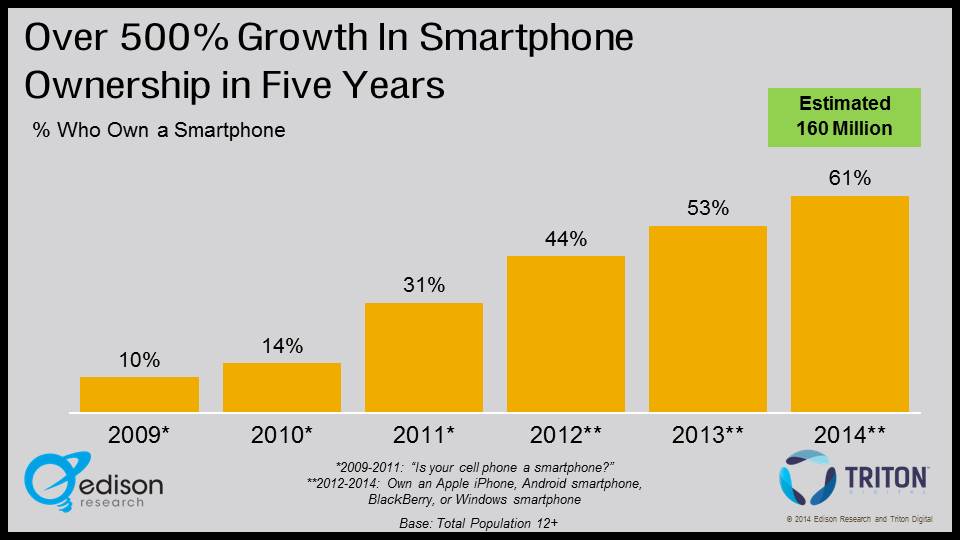
According to the Infinite Dial 2014, 61% of Americans 12+ now own a smartphone—up from 53% in 2013 and 44% in 2012.


If you’re still routinely complying with rules let over from the last century, it’s time to reassess how you spend your time talking. 
  • Give the time.
  • Mention the weather.
  • Talk about traffic problems in real time.
.. but, today, you better add value as well.  Those things have become generics.

Start with the assumption that the majority of listeners already know what you’re about to say and enrich it with a new perspective.

Longtime Texas air talent and personality coach Tommy Kramer calls it adding more camera angles to every scene.

Thursday, April 24, 2014

Stop Doing These Things

Listeners do love trivia and so they always say they love it when asked in focus groups.  Should you do trivia?

What about…
  • Today in history?
  • Joke Of The Day?
  • The daily wakeup call
  • Birthdays?
  • Anniversaries?
  • Lost pet announcements?
  • 50’s-60’s-70’s TV theme beat beds
  • The morning classic /oldie
Unless you can do it in a unique way that brands a unique, memorable benchmark, don’t do anything that sounds like everyone else would do it.

As Powerful Radio advocate Valerie Geller admonishes us all:  “never be boring.”

Thursday, December 12, 2013

Brand Depth

What drives big ratings success?

Major companies like McDonalds and Burger King, Apple and Microsoft, Coke and Pepsi, GM and Mercedes, etc. research various attribution categories to shine major light on pinpointing consumer perceptions in their respective industries and who their customers really are.

Building far above average rating shares that completely dominate a market aren't as simple as figuring out how many different listener perceived needs one radio station can fill, but thanks to two-decade-old data from Todd Wallace's Radio lndex "Winning Positions 2014" report it's certainly very possible to see how "owning" many programming attributes it took for one station to build a four book average #1 11.5 12+ share and a cume rating of 25.

This battle, of course, continues today, though under different owners that operated the two of them back then when the country format held more than an 18 share of total radio listening.

Wallace says "I believe one of the most useful and actionable displays is what we call a Perceptual Mosaic for each station, whereby all of the perceptual questions are collected and presented in rank-order form.

"This provides an interesting look at how the audience perceives how effective each station is in delivering each position.

"Because the questioning process includes the words "if any" ("Which radio station, if any, do you think plays the most music?"), each mosaic sums up the factors which are truly most important to the listener (as the specific attributes apply to each station)."

Hopefully, this report sparks a few new ideas on ways you can use attribution research to zero-in on positions that can make a difference in your battle(s), showing where you're hot and not.

If you'd like a free eight page report documenting Todd Wallace's Radio lndex "Winning Positions 2014" Attribution Research, Email-him and mention A&O&B.

Wednesday, September 25, 2013

Rebranding? Or, Bull?

Clear Channel has had a lot of success over the years with "The Bull" brand, so I certainly don't  begrudge their decision to change what had been a winning country image in Las Vegas for almost 24 years to be something "new."

Dittos with last January when Alpha converted 98.7 in Portland, due - I assume - that they felt that 1 + 1 didn't add up to "Couple" anymore.

Having worked for those two radio stations for a combined total of more than thirty years starting when they each dominated their markets under those now-ineffective names, I hope no one thinks that what's going on is just renaming a radio station whose ratings aren't what they used to be.

Study how different the programming is under the new brands.  Spend some time listening to Las Vegas' BULL and Portland's BULL.

These days a brand isn't a name or a music position. 

That's the bow on top of the package that may tell the recipient "open me first," but a brand that works is defined by what's inside the package.

A radio station starts to lose, not because it's name wasn't right.  Winning occurs because the radio station consistently engages listeners with talent who not only meets their perceived needs but constantly surprises, wows, by exceeding them.

Otherwise, it's just a bunch of bull.

Tuesday, August 20, 2013

Creating A Positive Brand Image

In radio, while the image of ‘just doing good for the community’ is seldom sufficient to win the ratings race for a station (especially in PPM markets where actual usage trumps all), the positive passion and powerful emotions that strong community involvement generate CAN often improve audience loyalty and station memorability.

Once we get beyond musical images, is there anything more important than being the station that helps kids or wounded vets?

In fact, there is.

Of course, doing a radiothon or a personality trip to a needy part of the world to dramatize the urgent need for them to lend a hand is often seen as a great way to activate your community and be experienced as a truly well-rounded Country station.


Savvy programmers understand that raising a large amount of money can require programming tactics which harm audience retention even as they build a brand.


Of course, in the long run, it is worth it and I encourage you to weave doing big things for your community into the fabric of everything you do year round, but there's another - often forgotten - way to achieve powerful brand depth without sacrificing a single quarter hour of listening or one cume listener.

It's simply being as responsive to everything your listeners care about in brief, meaningful ways all the time.

Get involved.  Share their stories.  Help.  Provide leadership.  It's what radio - voice tracked or live and local - does best, every day.

Wednesday, July 10, 2013

The Solution To Every Problem

That will certainly make a big difference your users will appreciate.  Ya think?

harrisonmichaelMakes about as much sense as worrying about which media try to stake their claim on the word "radio."

RadioInfo publisher Michael Harrison nailed it yesterday, “AM and FM broadcasting have never held a monopoly on the word ‘radio.’  I do not recall reading anything in history about Marconi playing records, dropping in jingles, doing the news, taking calls, interviewing guests, doing promotions, scaring people about a Martian invasion, selling advertising, or being involved in the community.  It never occurred to me that a taxi driver calling in to the dispatcher was doing a ‘show.’  I do know, however, that the definition of the term ‘radio’ as it applies to our industry has come to take on a very distinct meaning similar to the way such terms as ‘the theater’ or ‘the movies’ can also be applied to a specific art form and industry.  To me ‘radio’ as we use it in this business is not necessarily limited to AM and FM – but rather to the essence of its purpose and perception.  I define ‘radio’ as being audio-based media utilized for the conveyance of information and entertainment that creates a product significantly greater than the sum of its parts.”

People don't listen to "radio."  They listen to YOU.

Monday, June 17, 2013

The Ribbon On Top? Or, The Contents?

The history of call signs for radio around the world is, to say the very least, fascinating.

Until just a few years ago, in Canada, a commercial broadcaster was not even required to say the legal calls, perhaps because the privately owned commercial broadcast stations use primarily CF and CH through CK. 

So, you don't see anywhere near as many radio stations using just their four letters in their branding.

In the USA, Arbitron's diary asks first for call letters and only after that for dial setting and, third, "station name."  So, as long as diaries are the rating measurement tool, it pays to ingrain your listeners to write that down to be sure you don't lose any listening credit.

With PPM measurement, they don't even need to know your brand name.  They just have to actually use you.

It's axiomatic that every product needs a unique "position" that clearly exists in the mind of the consumer and they also must have an identity to link it with so they can remember where it's located and tell their friends about it.

There was a time when every new country station wanted to be Frogs.  Then, came Cats.  Now, the current flavor of the month appears to be "Bull."

Just how important is it to have "the proper, freshest, brand" (whatever that is) and "the correct position statement for today" (many stations change theirs annually, which leaves listeners confused and often remembering only the original one even from very long ago)?

I learned some lessons about this from three places where I worked.

In the 1970's I was OM of Buck Owens' KUZZ/Bakersfield. which listeners often called "cuz" no matter how much we only used the letters K-U-Z-Z on air.

Then, I went to "Radio KEEN" in San Jose where again I wanted to avoid what seems like a dated 50's word and so we never said "keen," and always used the four letters.  The vast majority of listeners never parroted our letters back to us, preferring to call the station "Radio KEEN," which drove me nuts.  

Finally, in the early 1980's I found myself at what listeners termed "Compass," in spite of the fact that the station had only used K-M-P-S for many years before my arrival as PD.  I'd bet that the current team at the station still hear that dated brand from the folks using it now.

What I learned:

Your brand and position are not words that you can "educate" listeners to adopt.  Those things are just the ribbon on top of the package and yet if you happen to be marketing or creating a product that a already possesses a positive name and message, deeply ingrained, don't fight them.  Creating a powerful identity takes a long time and can be extremely expensive.  Undoing an existing strong one can be next to impossible.
  • There is a reason that the word "content" lives inside the word "contents."
  • What listeners love that you do is your brand.  How and when they use you is your position, not a lovely logo typeface or costumed mascot.
Market those things.

Thursday, January 17, 2013

Rotating Your Imaging Messages

It's not important that you follow THIS strategy, but I do think it's crucial that you HAVE a strategy for controlling and keeping your branding fresh and relevant.

I like to have a minimum of two imaging pieces per quarter hour, one :15-20 seconds and one super brief, :02-:05.

i.e..

Music menu :15
Brander :05
Recycler :15
Brander :05
Community involvement :15
Brander :05
Attitude :15
Brander :05

.. plus two morning show promos rotating, playing one per hour. one of them dry, to be used up an intro talking about one reason content-driven to listen at a specific time tomorrow and a second to rotate with it that can be more fully produced which shows of the character differences/relationship of the personalities for fun.

That way if you rotate all of them equally across every quarter hour, it will take HOURS for the same one to repeat back into the same quarter hour.

Feel free to call 206 498 6261 if this raises any questions. If you have a better, more effective way to accomplish this, I'd love to hear about it.

Thursday, September 27, 2012

Everyone Knows What To Do. Doing It Is Hard.

The best content, executed as perfectly as possible as consistently as you can create it, drives daily cume.  Everyone has weekly cume.  Double what you thought you had in diaries.  Most of it is very short duration - as little as two and a half minutes for about half of every radio station's cuming occasions. 

To convert weekly cume to daily cume you must be unique, special and simply amazing every two and a half minutes, 24/7!

Unless you are alone in your format, music quantity statements and commercial free periods won't do this for you.  Seek, scan and world-wide streaming media offer more music, better music, anytime I want, not just want you want.

Inventory your non-duplicatable branded assets, be sure that they are loved by your target and then leverage the heck out of them.

Saturday, August 06, 2011

How To Spell B-R-A-N-D

Hayley Solich is CEO of Perth-based PR & Branding Agency The Creaticians:
"How do you build a successful brand and how do you measure how you are doing in terms of your reach, your marketing tools and your reputation?"

1. B is for Build - consistent effort creating an easily identifiable brand. Build your brand by posting consistently the same corporate colors, the same images, the same style of writing, the same ‘packaging’ across your platforms. If you are on multiple platforms, use the same profile pictures, for example. Make it easy for people to recognize you.

2. Reputation - Build a reputation for delivering on what you promise where possible. Build a reputation for producing high quality work and being generous in your dealings with "customers" by providing value. These are ways to build respect.

3. A is for Association. Create an association for people in their mind. Guard your reputation by ensuring that you never walk away from a dissatisfied customer where it is in your power to positively resolve the issue and by being careful about what you release into the public arena and who you associate with.

4. N = In a sea of competitors you need to become noticeable. People will associate you with your products and services. You are the guarantee that stands behind your products and services and it is really important that you understand that. We all know iconic brands like Coke an McDonalds. They have easily identifiable branding and it is noticeable in the marketplace. Why? Because they have worked hard to be consistent with putting that brand in front of their market. The golden arches at McDonalds are still the same today as they were 25 years ago.

5. D is for Differentiate. Differentiate yourself from your competition. Brand is an asset of a company because it is very closely associated with customers goodwill and your brand should be GUARDED at all costs.

Brand also becomes about the WAY that you do business and not just the products or services that you sell, especially in Social Media where you place your brand in the hands of customers to spread. Your businesses core values and ethos are part of your business brand. “It takes 40 years to build a reputation and about 4 seconds to destroy one.”

Excerpted from "Social Media Woman" E-Zine, July 2011

Wednesday, September 15, 2010

Country Music Is Authentic, Relatable, Emotional. Country Radio?

In recent weeks TV news branding consultant Graeme Newell has been writing about the specific differences between a slogan and a brand as well as effective and ineffective brands.

On one hand, he's only talking about "news."

On the other, he's talking about US too!

With that in mind, I asked Reel World’s Craig Wallace to create a list of the phrases their writers and singers have been successfully cramming onto the notes of one of their hottest country packages right now.
  • "The Best Variety Of Country"
  • "Today's Best Country"
  • "Today's Hot New Country"
  • "Continuous Hot Country Favorites"
  • "Today's Best And Most Country"
  • "More Continuous Country"
  • "Number One For Country"
  • "Today's Country And Your All-Time Favorites"
  • "Your Country Station"
...and "(city)'s Best Country" and "(city)'s Country Station."

Is this really everything we want our brands to stand for?

Saturday, July 25, 2009

Does Your Brand And Position Statement Mean Anything Anymore?

(Pictured: what a "Not A Starbucks" looks like) They've done it again. On February 26, 2008, all their stores closed for a day of "training," forcing their local customers to go to the competition for at least one day if they wanted a cup of Joe.

If it improved the Starbuck product even a teeny vente I sure couldn't tell. But, as a publicity stunt, it was amazingly effective, creating buzz both online and in traditional media that would have cost billions to 'buy,' if it had even been possible.

Now, they are doing it again and once again the media is all over it. But, this time, is it something more than a play for publicity?

Unbranding, of course, started with cell phones as techies liked a specific phone and had to tear into it to get it to work with the wireless carrier they prefer. This was the first notice to big corporate brands that the market sees itself in control of your brand, not you. If you do something they don't like in terms of their values, you are toast. Brand names which spend decades creating "unique selling propositions" can lose market share overnight when that USP gets repositioned as obsolete.

Metered TV and radio ratings have meant that listeners and viewers no longer need to remember what programming they used. The emphasis is on great quality of whatever it is the user wants right now instead of brand loyalty.

What does your brand name mean to your listeners? Is it still relevant? Your position statement? Is Starbucks at the cutting edge of de-branding? Or, just another stunt?

A&O is in the business of helping radio stations get those answers before someone next door gets tons of free buzz using clever net marketing, stealing brand assets from you. We are getting our Spring 2009 Arbitron, Eastlan, BBM and Nielsen report cards right now and the results have been extremely gratifying.

Saturday, February 14, 2009

Google Is Bad For Brands

Get this book:
"People go online looking for something, find the answer, and often don’t know where they found it. Google found it. They’re savvier today and know that Google doesn’t own all the content it links to. But that doesn’t matter, so long as they find what they want—and Google is damned good at that. That’s great for users but bad for brands. Here you work your buns off creating a brand online; you build technology and staff to maintain your site; you spend a fortune on marketing and search-engine optimization to get people to find it; you tell advertisers how many users come to your page and like your brand. But in the end, huge numbers of users don’t recall coming to your site and don’t credit your brand."

Wednesday, April 30, 2008

Country Lovemarks


Kevin Roberts, CEO Worldwide of Saatchi & Saatchi Advertising wrote the book "Lovemarks: the future beyond brands" several years ago and has just updated his theories in a new one, "The Lovemarks Effect: Winning in the Consumer Revolution."

A very cool aspect of the book is its companion website, where consumers are encouraged to nominate brands they love and would call their personal lovemarks.

Country artists making the top 100: (43) Keith Urban, (79) Alison Krauss, (93) Reba McEntire, (94) Toby Keith and (99) Patsy Cline.

"At the core of every Lovemark is Respect. No Respect? It’s not a Lovemark. It’s as simple as that."

Put Your Brand To The Test by clicking here

Thursday, September 27, 2007

The Stickiest Brand And Slogan I've Ever Been Involved With


I have been associated with many, many Frogs, Wolves, KIX's, Colts, Cats, Ducks, Bears, Young Countries and a veritable menagerie of other names and position statements in my more than three decades in the country format, but only one of them has ever been parodied in a cult TV show which continues to live on in YouTube form while also continuing to live on numerous very successful American and Canadian radio stations:

"Turn Your Knob To BOB 100 FM." (click to watch the silly web video of the episode)

I wish I could say I thought of it, but I (as KB would say) "was there" when a great team of strategists put it all together and brought it to life in Minneapolis.

The individuals who made some radio history: GM Kevin McCarthy, PD Bob Wood, sister station KQQL PD Kevin Metheny, along with brilliant architects Randy Michaels, Joel Lind and an amazingly talented staff they all put together.