Showing posts with label benchmarks. Show all posts

Thursday, June 26, 2014

Success

Now that PPM has proven the average radio station’s highest usage daypart is afternoon, it’s not possible to simply judge a morning and midday personality by their daypart's ratings alone.
  • Does morning drive attract enough early morning cume recycle their audience into midday and afternoon?  (folks tuning to radio at home before 7 am, listen several hours per day more than the average person - who now starts their day at home with television and only turns to radio when they get in the car, so those very early radio at home listeners help the station all day)
  • Does your morning audience grow after 8 am, as listeners arrive at work?  (many do not, as a station's cume switches into at work station mode)
  • Does the midday talent take whatever cume given to them in their first quarter hour and avoid dips in their quarter hour by quarter hour and day by day audiences (that requires an understanding of the best places to put the stickest content)?
A morning show and midday host is successful when they not just beat their competitors head to head, but when a large percentage of the cume audience is actually returned to the station for the next day part.

Evenings and overnights must do the same thing for the next morning show's audience.

Listener retention is about both eliminating irritants and entertaining content, acting like a user magnet in every minute.

That is how we must attack our success.

Sunday, June 01, 2014

Building Blocks

If you expect your listeners to recall and even more crucially "use" your daily benchmarks as PPM-drivers, you need to be so entertaining at every moment that the audience is in constant fear of missing anything so they never tune out.  

OR, you need "named elements" that simply knock their sox off and create daily buzz at predictable times.  Theorems behind this concept:

1.  Be certain your listeners know the names of these key appointments for entertaining listening.

2.  Listeners rarely can recall more than two or three of them.  That means you are wasting your (and your listener's) time naming daily elements that fail to be sticky over the long term.

3.  The name of each solid benchmark must provide a clear indication of its meaning, which listeners all understand.

4.  You know how much interest each potential entertainment element contains for your listener, as well as the perceived importance of every type of attribute you consider adding to your show.

5.  What kind of/level of negatives does each also generate?  Do the positives greatly outweigh the negatives?

There's only one way to be sure.  Ask your listener.  Thanks to today's many social and interactive research tools, it's now easier than ever to do so. 

Which means that if you're not constantly tracking real-time feedback from your heavy users to be sure that what you believe are your "benchmarks" serve as the same for listeners, it's quite likely that your competition knows more about what works and what doesn't on your radio station than you do.

Friday, April 25, 2014

Is It Time To Stop Doing Time Checks, Traffic And Weather?

Once essential “basics” of every morning show that were drummed into the head of each personality so that just giving the time wasn’t enough.  You had to do double time sells.  Analog and digital.  Every time.  7:16, 16 past seven.

Reporting traffic and weather every ten minutes wasn’t enough.  We went to “the seven minute traffic and weather guarantee.”  Then, the other guys did too.

That was then.  Now?

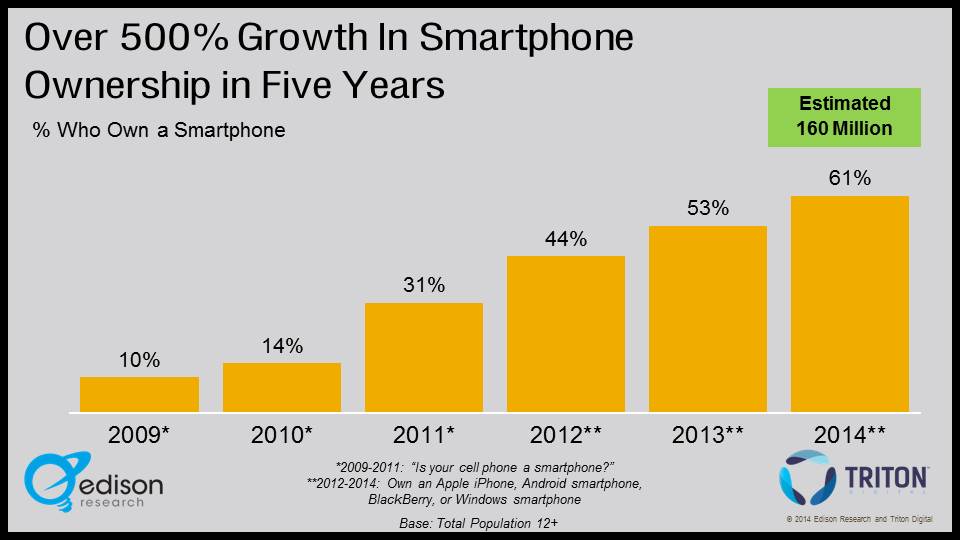
According to the Infinite Dial 2014, 61% of Americans 12+ now own a smartphone—up from 53% in 2013 and 44% in 2012.


If you’re still routinely complying with rules let over from the last century, it’s time to reassess how you spend your time talking. 
  • Give the time.
  • Mention the weather.
  • Talk about traffic problems in real time.
.. but, today, you better add value as well.  Those things have become generics.

Start with the assumption that the majority of listeners already know what you’re about to say and enrich it with a new perspective.

Longtime Texas air talent and personality coach Tommy Kramer calls it adding more camera angles to every scene.

Thursday, April 24, 2014

Stop Doing These Things

Listeners do love trivia and so they always say they love it when asked in focus groups.  Should you do trivia?

What about…
  • Today in history?
  • Joke Of The Day?
  • The daily wakeup call
  • Birthdays?
  • Anniversaries?
  • Lost pet announcements?
  • 50’s-60’s-70’s TV theme beat beds
  • The morning classic /oldie
Unless you can do it in a unique way that brands a unique, memorable benchmark, don’t do anything that sounds like everyone else would do it.

As Powerful Radio advocate Valerie Geller admonishes us all:  “never be boring.”

Wednesday, April 09, 2014

Benchmark Brainstorm

A few years ago Mike O’Malley and I conducted a day-long air personality development seminar in Atlantic City.  We used it to test eight hours’ worth of presentations which we have since used with great impact at A&O&B client radio stations.

One of the most fun exercises we did that day was called “Benchmark Brainstorm.”  The two of us took turns suggesting ideas for bits, stunts, contests, promotions and content that would be memorable to listeners, bringing them back day after day to hear more.

Alternating with our ideas we called on the audience to contribute their best and most successful creative.  A scribe wrote them all down and everyone left that day with four or five single-spaced pages of things to do on the air for fun and buzz.

Later as we reviewed all of the off-the-wall suggestions both Mike and I were at the same time proud of our group’s creativity and fearful that one of the stations in attendance would put them all on the air immediately.

Rating success is not driven by the number of clever nicknames for various forms of content a station does every hour.  It’s the very small number of them that listeners care about, like and use as road signs for their reason to turn the radio on.

The difference between “clutter” and “benchmark” is defined by the listener.

Almost universally the average radio station has far fewer “benchmarks” than they think.

The final step in any “benchmark brainstorm” is finding out which ones listeners love and dropping all of the others which are only wasting time.

Find out the small number of things you’re most famous for and do them a lot more.

Monday, April 07, 2014

Becoming More Memorable

Increasing top-of-mindness:

1.  Find out which of your personalities your listeners know on an unaided basis.
2.  Test your programming features and stress the "benchmarks" among them.  Which ones can listeners name as a reason they listen to you?
3.  Find out of the core artists you play most bring your brand to mind for target listeners more than any other radio station.
4.  Proudly stand for values and attitudes your audience relates to.

Be certain that these 'benefits' can be described (as Lovemarks) on an unaided basis by as many members of your potential coalition as possible when compared to other radio stations they also use.