Showing posts with label Performance Royalty. Show all posts

Tuesday, January 29, 2013

The Future Was .. When?


DDC6: The Future Was Now

“The only time I download anything on iTunes is in the rare case that I can’t find it on Spotify.”

   - Sam Broe in today's New York Times article,  "As Music Streaming Grows, Royalties Slow to a Trickle"

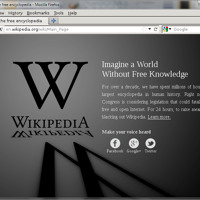
Meanwhile, last weekend, Seattle radio reporter Joshua McNichols wrote for his in-depth report "The Day The Internet Went Dark And How It Changed History:"

"A little over a year ago, Wikipedia, Google and thousands of other websites went dark. They were protesting an Internet privacy act being considered in Congress. It was the largest protest ever conducted on the Internet. And it worked.
 

"One of its organizers was Aaron Swartz. Swartz advocated for the Internet to be free. His quest for free information got him in trouble.  He was caught trying to leak academic papers to the public. The US Department of Justice tried to make an example out of him. But he committed suicide."
 "Stealing is stealing whether you use a computer command or a crowbar."
     - Federal prosecutor Carmen Ortiz

Hopefully, these strong characters and their compelling story lines will engage you to spend the time to read the NYT article and then listen to McNichols' entire well-balanced radio report chronicling the complicated media revolution now underway.

Swartz wanted what he termed "legacy media" to abandon long standing financial models and - as he did - exploit the internet to find new business approaches.

At one time I would have said "he has nothing to lose and everything to gain" by embracing open source for fun and profit," while those of us owning businesses holding intellectual property with established revenue streams much larger than new media can equal don't have that luxury.

How sad that it came down a matter of life and death for a brilliant young man.

Tuesday, June 14, 2011

Hits? Or, Mechanicals?

Tom Roland's Country Update "takeaway" this morning from last week's second annual Billboard Country Music Summit - that the business is simply upside down as CD sales slipped another seven percent - in spite of CMA market research director Greg Fuson's report that "the majority of North America's 95 million country fans are an attractive and growing target which defies traditional stereotypes" - contains more than a small clue as to why both things might be the way they are.

Roland quotes CMT senior VP of music strategy Jay Frank equating a celebration of the CD to cheering for the rotary phone.

"The CD still has life in the marketplace," Frank said, "but instead of thinking of it as the primary source of business for Music Row, it should be considered just one of numerous revenue streams, including digital sales, online streaming of music and videos and—thanks to 360 deals—partnerships in other segments of the business. Ten years ago," Frank said, "a major label might have six forms of product on an artist. Now, that same artist might be the source of 300-500 product formats. Each of those products is likely to bring in a fraction of what the label previously received, but the small bits and pieces added together have the potential to make up ground."

Nashville Songwriters Assn. International executive director Barton Herbison responded to that optimistic future view, complaining that with fewer CDs selling, non-hit album cut mechanical royalties are a smaller part of the equation.

Somehow, he equated that factor to a need for radio to pay performance royalties — the payments that songwriters and publishers receive for the public use of their material, primarily from radio, which elicited this quote: “You could have a song on [a] CD and make a living with a song that never went to radio,” songwriter Rhett Akins said, reflecting on the ’90s, when such artists as Shania Twain and Garth Brooks routinely went multiplatinum. “Now it’s hard to get a songwriting deal if you’re not getting songs on the radio, because the amount of sales doesn’t add up to enough for your publisher to keep you around.”

So, let me get this straight.

Radio needs to pay for the people who write songs we don't play?

Listeners not wanting to buy albums anymore because of all the songs they don't want to pay for because they don't add sufficient value to the CD means that radio must pay performance royalties so that songwriters who don't write hits should continue to make a living?

Upside down is right. Upside down thinking.

Wednesday, September 22, 2010

If Canada's Cultural Institutions Are Coming Undone, Who's Next?

At the moment, Canadian listeners are still unable to listen to the streams of most American radio stations owned by major broadcasters or the CMT site from Nashville due to "rights" issues.

How much longer can border barriers on any country's unique content like those hold up in the face of a huge global market and the money it represents?

If Ottawa lacked the will to do it, who does?

Much as I dislike the growing power of a small handful of media conglomerates, the agenda was set when the CRTC ruled the internet was outside of its jurisdiction. In that one fateful decision the future of Canada’s cultural institutions was decided on. The new world of unregulated media no longer is obligated to support Canada’s cultural institutions and without funding its Lady Gaga and Hollywood all the way to the bank.

For those that can remember a more giving time it is easy to wax nostalgic and cry a river over the loss of a Canada past, but in reality that Canada passed us by some time back. We just failed to take note of the fact. For good, bad or worse, protectionism is off the table, global influences are pervasive and unfettered capitalism is now democracy’s ungiving dictator.

-- David Farrell

Friday, April 02, 2010

The Best April Fools Joke EVER

Performance Bill Passes: The Washington Post is reporting that in an unexpected late-night session, Congress passed HR848, commonly known as the Performance Rights Act, by a 219-216 margin in the House and 64-33 in the Senate. The measure grants performers and sound recording copyright owners an initial 5% of terrestrial radio station gross revenue, escalating to 8% by 2013. Effective immediately, the new law has sent radio groups scrambling, with many top market stations pulling music or going dark. A quick check reveals talk-only programming at Country stations including WUSN/Chicago, KKGO/Los Angeles and KPLX/Dallas.

Representatives of the RIAA were reportedly displeased with the passage as eleventh-hour changes saw a shift in distribution percentages, with artists and performers taking fully 90% of collections over record labels' 10%. For their part, artists and performers are equally unhappy that the bill included an addendum that will allow engineers, assistants, techs and in some cases recording session caterers to participate in the revenue stream. The so-called "Cheese Tray" provision, according to some accounts, even has the potential to reward studio janitorial staff and valets who work on rainy days. Read a full report here.

Hats, off to the Country Aircheck team! You got us!

Memo to Barack Obama, and this is no prank: that bit about the majority of the money going to artists is a JOKE too. That's why radio (and me!) stand in unity against it.

Sunday, October 25, 2009

Killing The Goose

As news-talk consultant Holland Cooke keeps predicting a tsunami of talk FM stations should Congress ever grant the record industry's wish to get a royalty for radio airplay of their music, it's easy to shrug and say that it's surely never going to really happen because at the end of the day the RIAA will realize that they'll lose a lot more than they gain should they win this fight.

If that's how you feel, please take an hour and listen to NPR's On The Media this week.


History demonstrates that labels have a long track record of shooting themselves in the foot by putting the people who are in position to grow their business .. out of business.

Friday, June 12, 2009

A Rational Take On The Performance Tax Battle

Jesse Walker writes:
"For decades, record companies have been begging radio stations to play their music. Sometimes they do more than beg: Few sorts of scandal reappear as reliably in the music business as a payola scandal, in which agents of the labels are caught bribing broadcasters to air their wares. In the Internet age, the AM and FM dials aren't as important to promoting music as they used to be, but they continue to play the preeminent role in the process. As Clive Davis, a dominant figure in the record industry since the '60s, told USA Today just this month, "Radio is still the leading force of determining what songs and artists break through." Now the Recording Industry Association of America and a coalition of other industry groups are backing a bill, the Performance Rights Act, that would require those same stations to pay a new fee for the right to air those records. An industry that is infamously willing to pay for airplay apparently wants to charge for airplay too."

Leave it to the libertarian publication (click to read the entire article) to place radio and the music business's Congressional battles in a very well-reasoned context.